
Shells & Shore Creatures
What you’ll discover on sandbars, beaches, and tidal flats.
How to explore & respect
Work tide windows—falling tide to low tide—on bars, wrack lines, and calm bay beaches. Watch for siphon holes, fresh tracks, and subtle movement in the swash. Photograph living finds in place; return creatures gently to the water; keep dunes, grassbeds, and rookeries undisturbed.
Florida Horse Conch (Triplofusus giganteus) — state shell
Big predator with a vivid orange interior. Finds often follow calm stretches and good water clarity; living adults cruise flats hunting other snails.
- ID tips: Very large spiral shell; orange aperture; strong, elongated spire.
- Behavior note: Carnivorous; living shells may trail a broad foot and operculum.
- Respect & safety: If animal is inside (moist foot/operculum), do not collect. Photograph, then place shell back aperture-down in shallow water.
Lightning Whelk (Sinistrofulgur sinistrum)
Left-handed spiral with lightning-bolt patterning. Look for egg cases (“strings”) along wrack after blows.
- ID tips: Aperture opens on the left; zig-zag markings; sturdy shoulder.
- Behavior note: Predatory; drills/clamps bivalves. Egg strings wash up in spring.
- Respect & safety: Live whelks belong in the water. Return gently; keep egg strings for observation only—don’t remove from protected areas.
True Tulip (Cinctura lilium)
Sleek spiral with richer mottling than the banded cousin; often near seagrass edges where prey is abundant.
- ID tips: Larger than banded tulip; complex brown-olive mottling; glossy aperture.
- Behavior note: Active predator on other mollusks; may be found moving half-buried.
- Respect & safety: If living tissue present, admire in place and release; avoid exposing to hot, dry air.
Banded Tulip (Cinctura hunteria)
Slender tulip with clean, evenly spaced bands. Often mixed with smaller whelks on firm sand.
- ID tips: Narrower profile; crisp dark bands on light ground; shorter spire vs. true tulip.
- Behavior note: Hunts other snails; may trail a narrow furrow when moving.
- Respect & safety: Check for operculum/tissue; if present, release. Keep found empties out of roped turtle nest zones.
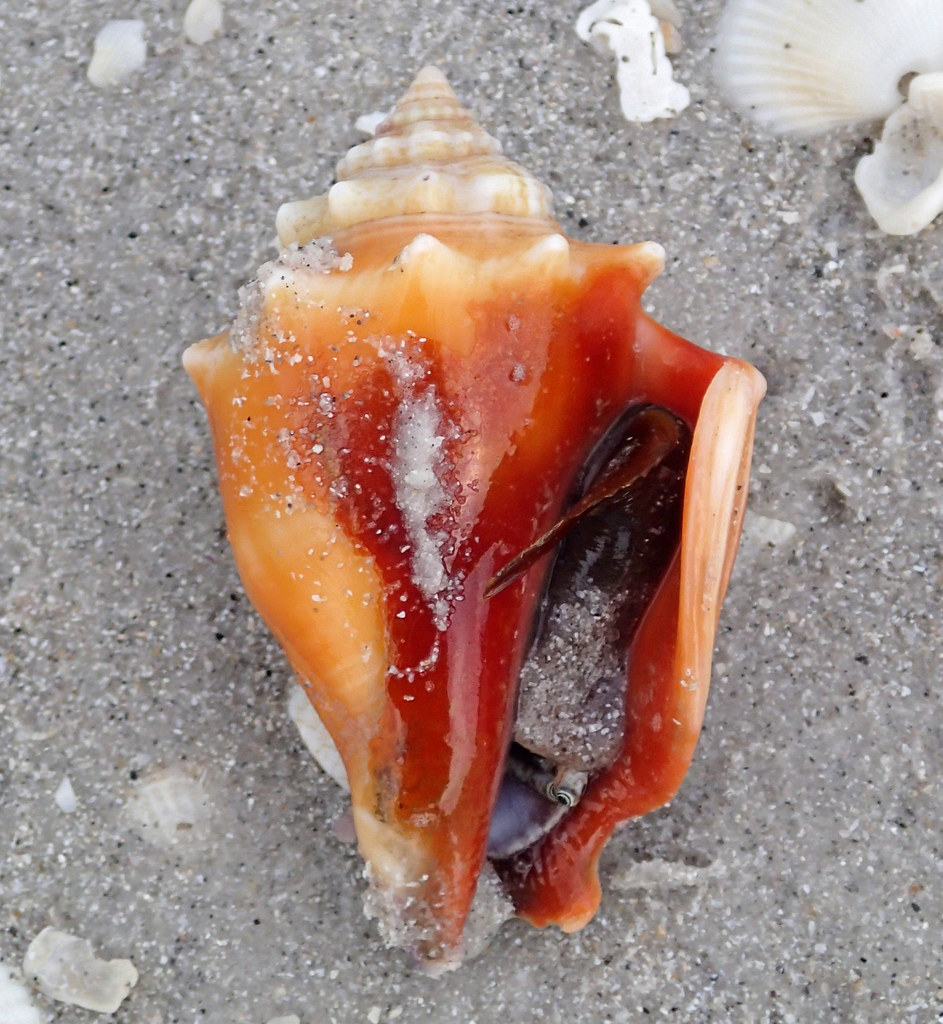
Florida Fighting Conch (Strombus/Aliger alatus)
Chunky conch that “hops” using its operculum when alive. Common on gentle Gulf beaches after calm spells.
- ID tips: Heavy, nodulose whorls; flared lip on older shells; orange interior tones.
- Behavior note: Grazes algae; live individuals can vault forward in short bursts.
- Respect & safety: Return live conchs to shallow water. Don’t collect freshly dead shells with occupant remains in warm months (odor/health).
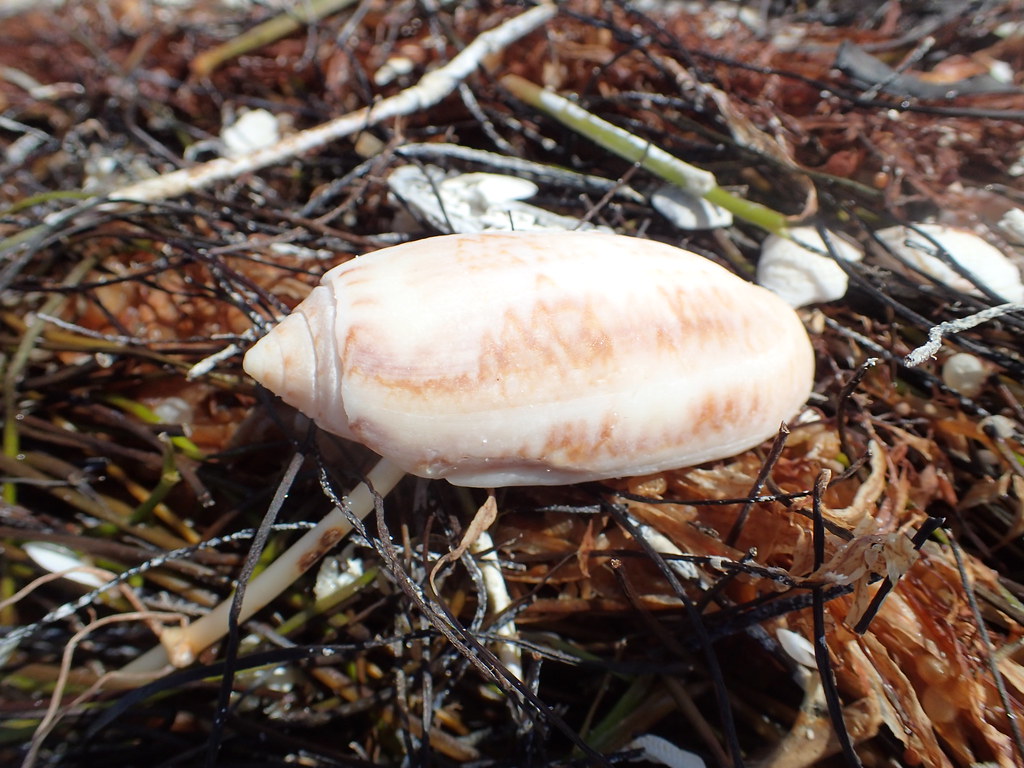
Lettered Olive (Americoliva sayana)
Smooth, glossy cylinder that rolls in the swash when surf is gentle. Look for fresh “scribbled” markings under sheen.
- ID tips: Polished, elongated shell; brown “letter-like” script markings; narrow aperture.
- Behavior note: Burrows quickly in moist sand; active at night and calm mornings.
- Respect & safety: Replace live olives in damp sand or shallow water, aperture down; avoid drying winds.
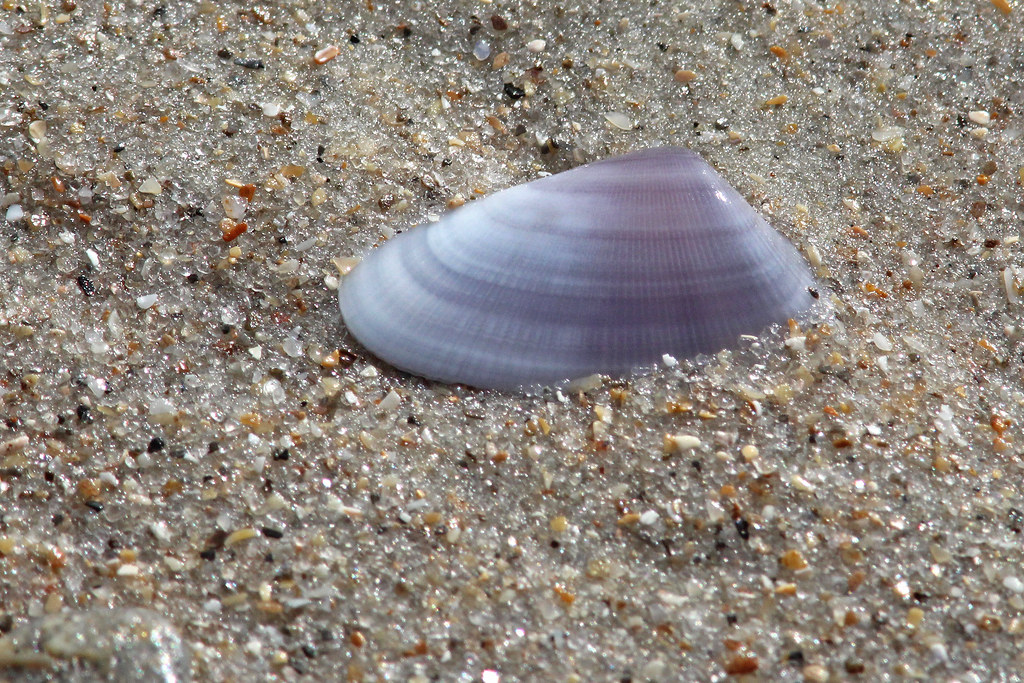
Coquina (Donax variabilis)
Tiny clams that zip backward as waves retreat, creating glittering carpets of color in the shallows.
- ID tips: Small triangular shells; wildly variable colors/patterns.
- Behavior note: Rapid burrowers that “surf” with each wave pulse.
- Respect & safety: Avoid scooping dense beds for souvenirs; step lightly and let waves carry them back.
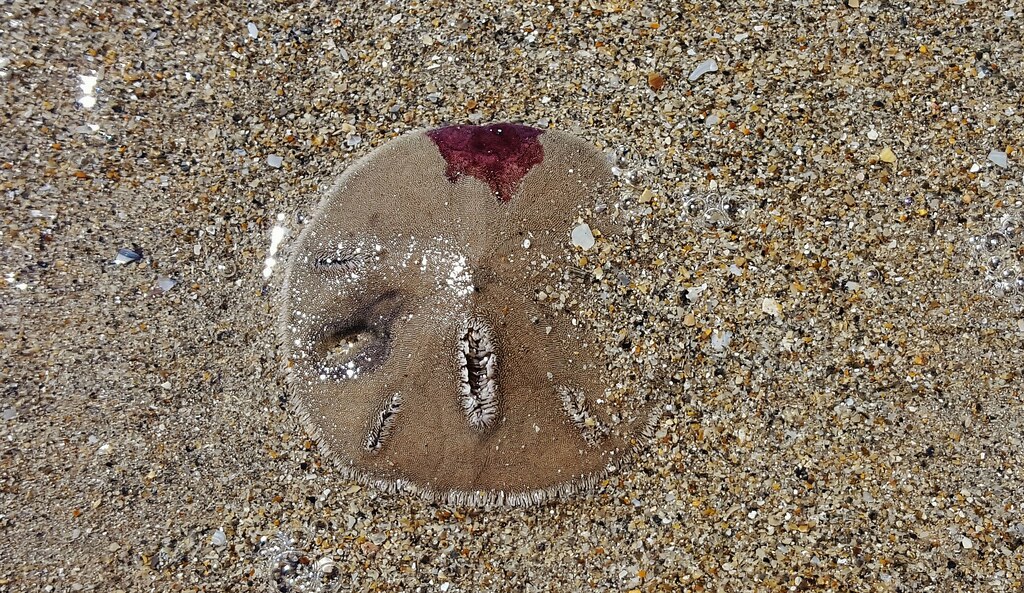
Sunray Venus (Macrocallista nimbosa)
Elegant, elongated clam with sunburst rays radiating from the hinge. Hinged pairs appear after smooth swells.
- ID tips: Long oval shape; fine rays fanning from hinge area; smooth, glossy valves.
- Behavior note: Lives buried; paired valves indicate recent wash-in.
- Respect & safety: If valves are still joined with tissue, return to wet sand or shallow water.
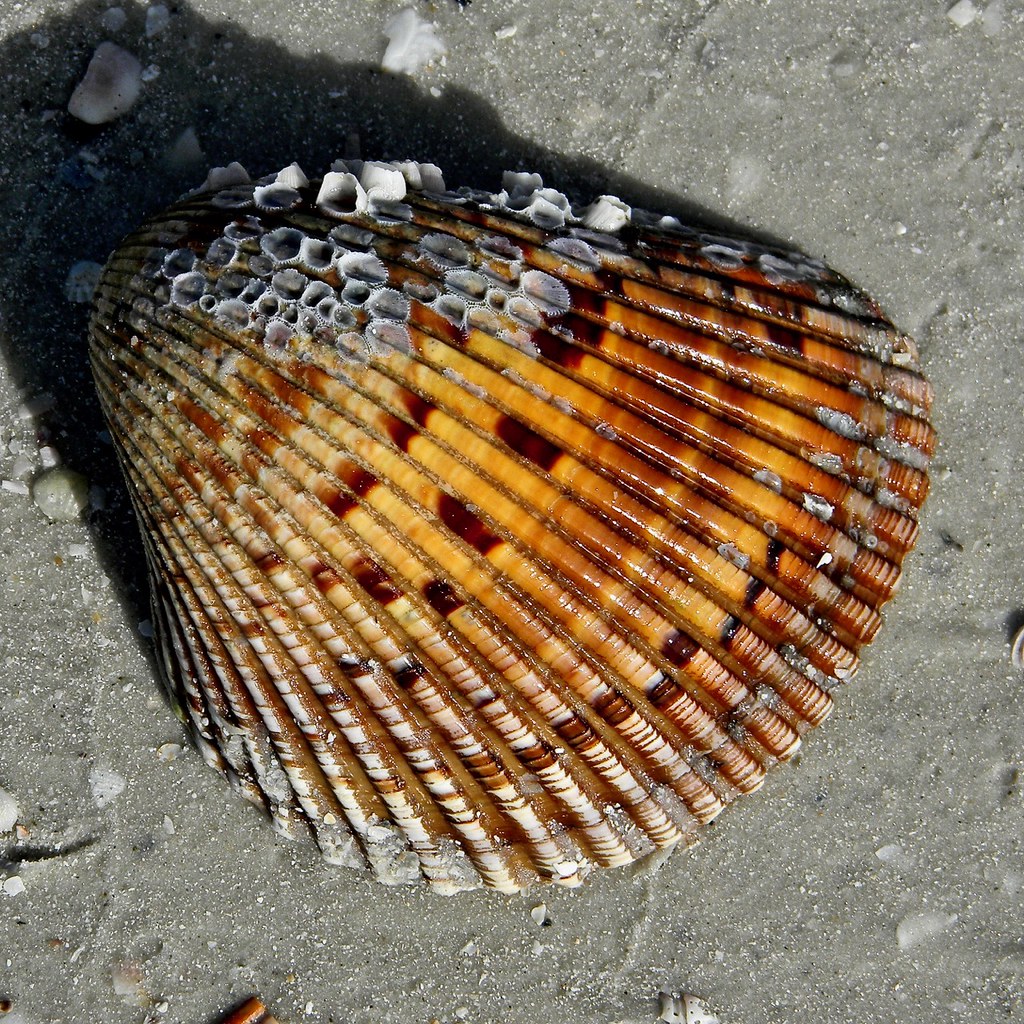
Atlantic Giant Cockle (Dinocardium robustum)
Heavy bivalve that forms a heart shape when paired. Often tossed high with eelgrass and driftwood after fronts.
- ID tips: Thick ribs; rounded triangular outline; deep, sturdy hinge.
- Behavior note: Buried filter-feeder; live animals clamp shut firmly.
- Respect & safety: If valves are heavy and sealed, it’s alive—return to moist sand; avoid prying open.
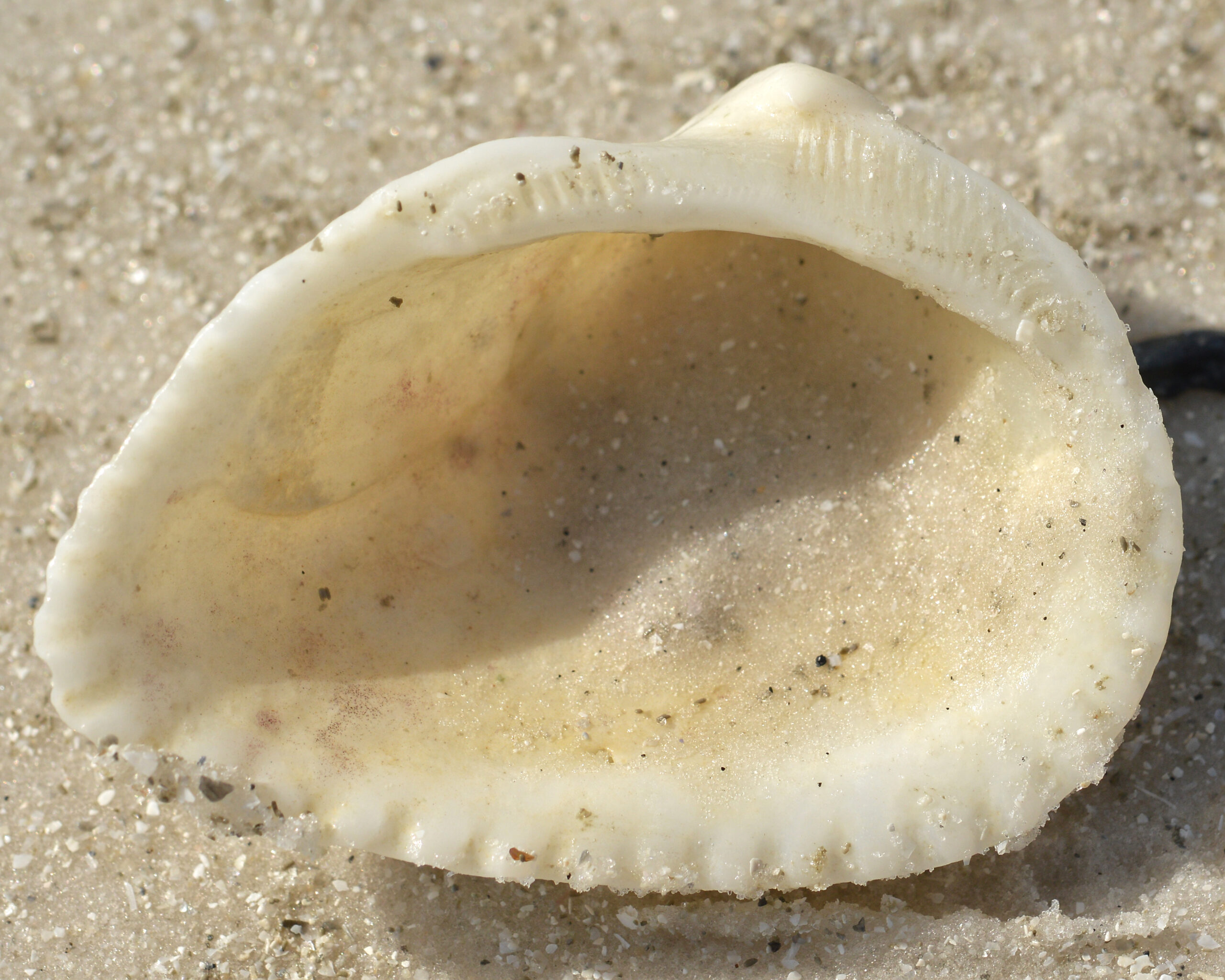
Ponderous Ark (Noetia ponderosa)
Thick, ribbed bivalve common in storm toss. Valves may be chalky with silt and algae when fresh from bottom.
- ID tips: Heavy, squared outline; strong ribs; chalky exterior.
- Behavior note: Lives buried; valves often separate soon after washing up.
- Respect & safety: Leave living clams; avoid trampling dune plants while hunting shell lines.
Keyhole Sand Dollar (Mellita quinquiesperforata)
Living dollars are velvety and tan to purple-brown, often partly buried with tiny spines moving grains like a conveyor belt.
- ID tips: Flat disc with five keyholes; petal star on top; living ones feel fuzzy.
- Behavior note: Spines move it slowly and keep it buried; bleached white ones are long dead.
- Respect & safety: Leave living dollars; hold “test” (dead shell) flat with two hands—fragile and easily broken.
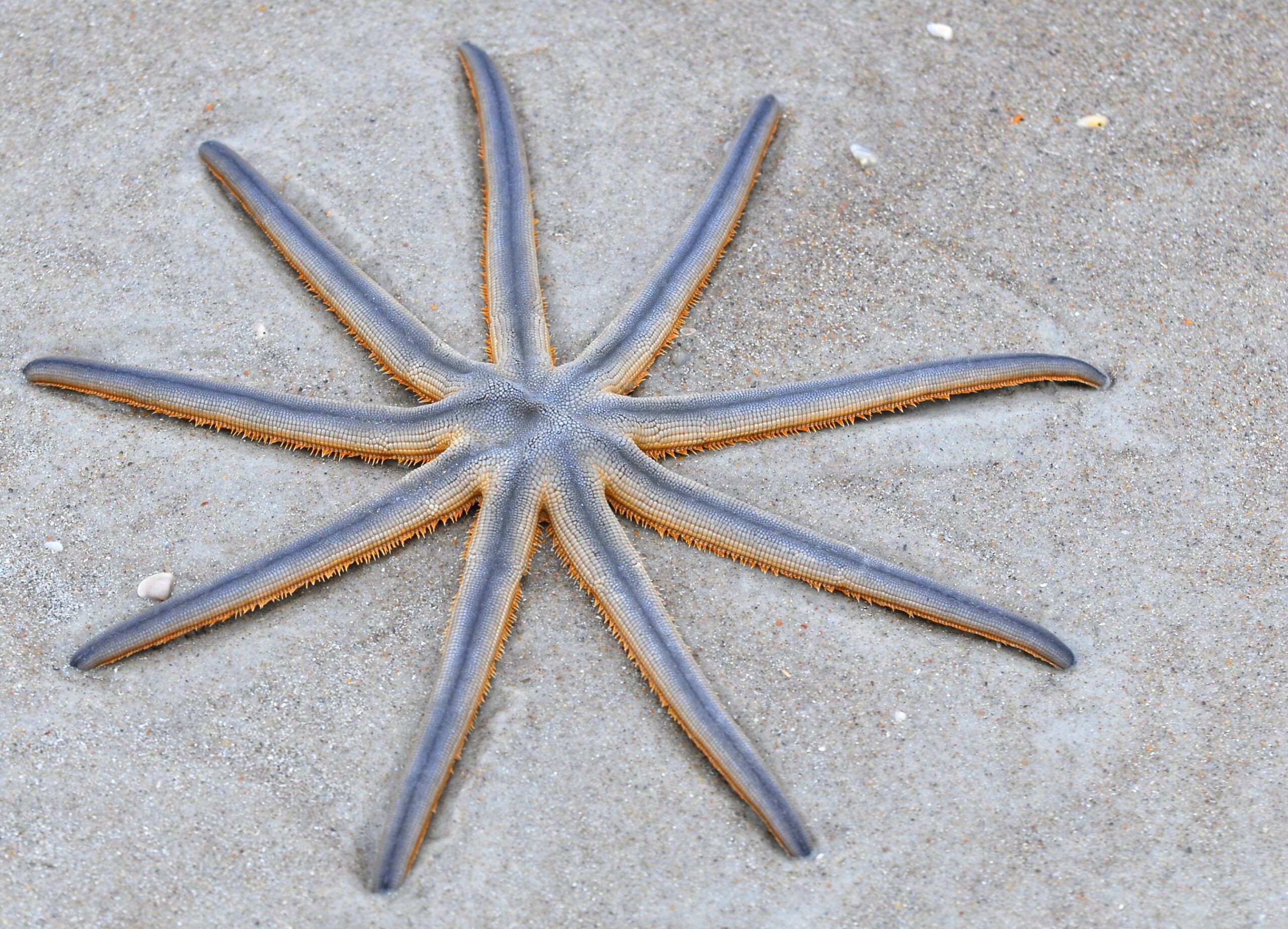
Nine-armed Sea Star (Luidia senegalensis)
Slender, speedy sea star that sometimes turns up after blow-outs. Living animals flex and move with hundreds of tube feet.
- ID tips: 7–9 long arms; mottled gray-olive; flexible body.
- Behavior note: Buries shallowly; can move surprisingly fast for a sea star.
- Respect & safety: Handle with wet hands under water only; return promptly; avoid hot, dry air exposure.
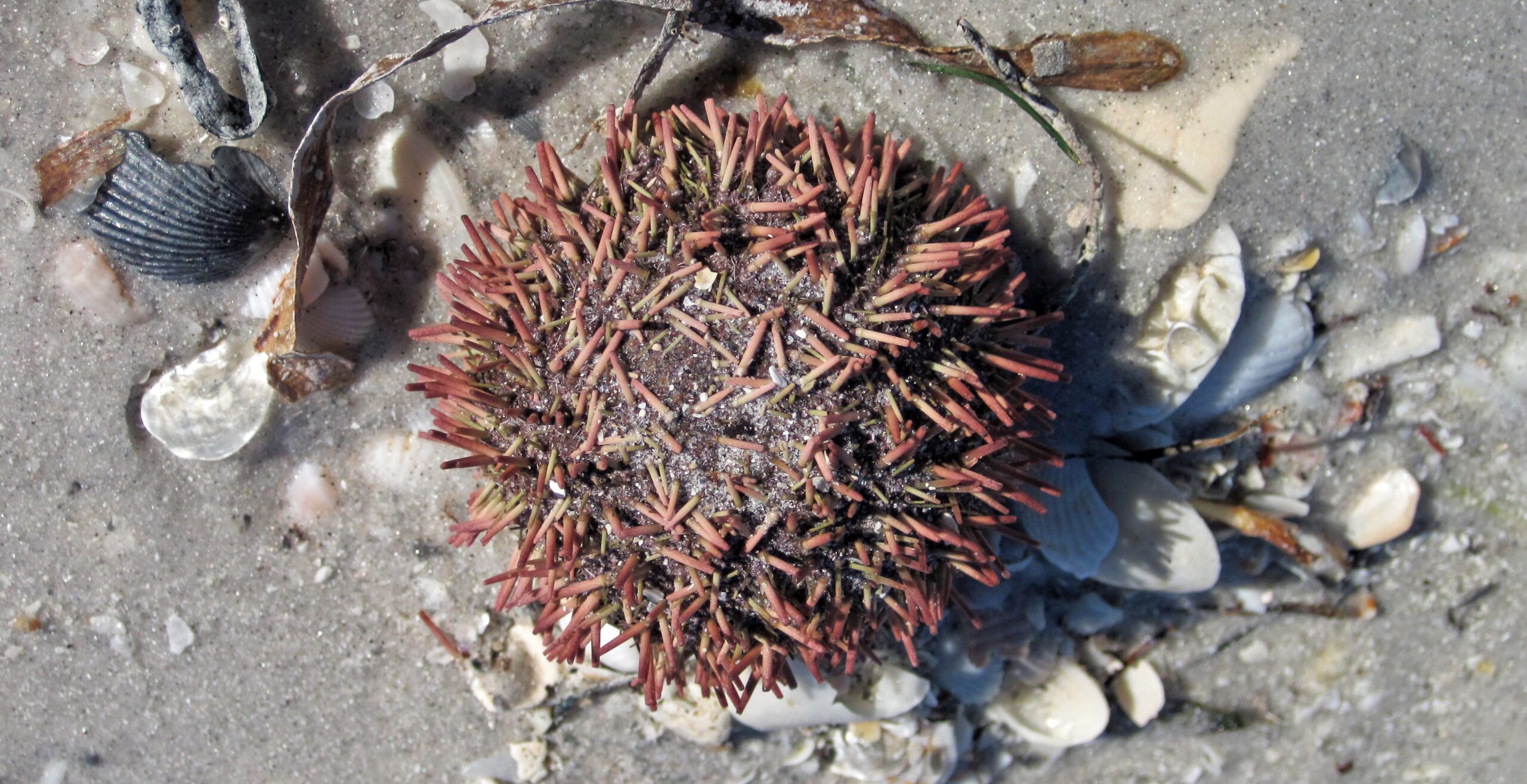
Variegated Sea Urchin (Lytechinus variegatus)
Round urchin that collects shell bits and seagrass on its spines to shade itself. Colors range green to purple.
- ID tips: Spherical test with short spines; often carrying debris on top.
- Behavior note: Grazes seagrass/algae; hides by day with camouflage.
- Respect & safety: Spines can puncture—do not squeeze. Observe underwater; return gently to substrate.
Atlantic Ghost Crab (Ocypode quadrata)
Beach sprinter with stalked eyes and sand-colored shell. Burrows dot the high beach like moon craters.
- ID tips: Pale, boxy body; tall eye stalks; one claw often slightly larger.
- Behavior note: Nocturnal forager; retreats to deep burrow at disturbance.
- Respect & safety: Don’t collapse burrows; use red lights at night; keep dogs leashed near upper beach.
Mole Crab / “Sand Flea” (Emerita talpoida)
Oval, sand-colored crustacean that tumbles with waves, then burrows backward to filter plankton with feathery antennae.
- ID tips: No visible claws; smooth oval carapace; rapid backward burrowing.
- Behavior note: Orients to breaking waves in tight groups; numbers spike seasonally.
- Respect & safety: If collecting for bait, follow local rules and take sparingly; avoid trampling dense beds.
Fiddler Crab ( Minuca/Leptuca spp.)
Little engineers of the flats. Males wave an oversized claw to claim space; burrow openings pepper gentle banks and marsh edges.
- ID tips: One claw greatly enlarged in males; square body; quick sideways run.
- Behavior note: Burrows for moisture and temperature control; feeds on surface films.
- Respect & safety: Avoid sinking mud; step around dense burrow fields; keep pets out of salt-marsh vegetation.
Horseshoe Crab (Limulus polyphemus)
Ancient shoreline crawler. During spring moon tides, pairs come in to spawn; molts (empty shells) are common along wrack.
- ID tips: Horseshoe-shaped carapace; long tailspine (not a stinger); many legs underneath.
- Behavior note: Males grasp females during spawning; molts are light and hollow.
- Respect & safety: If flipped, lift gently by the sides (never tail) and set facing water. Report tagged individuals as instructed on tag.
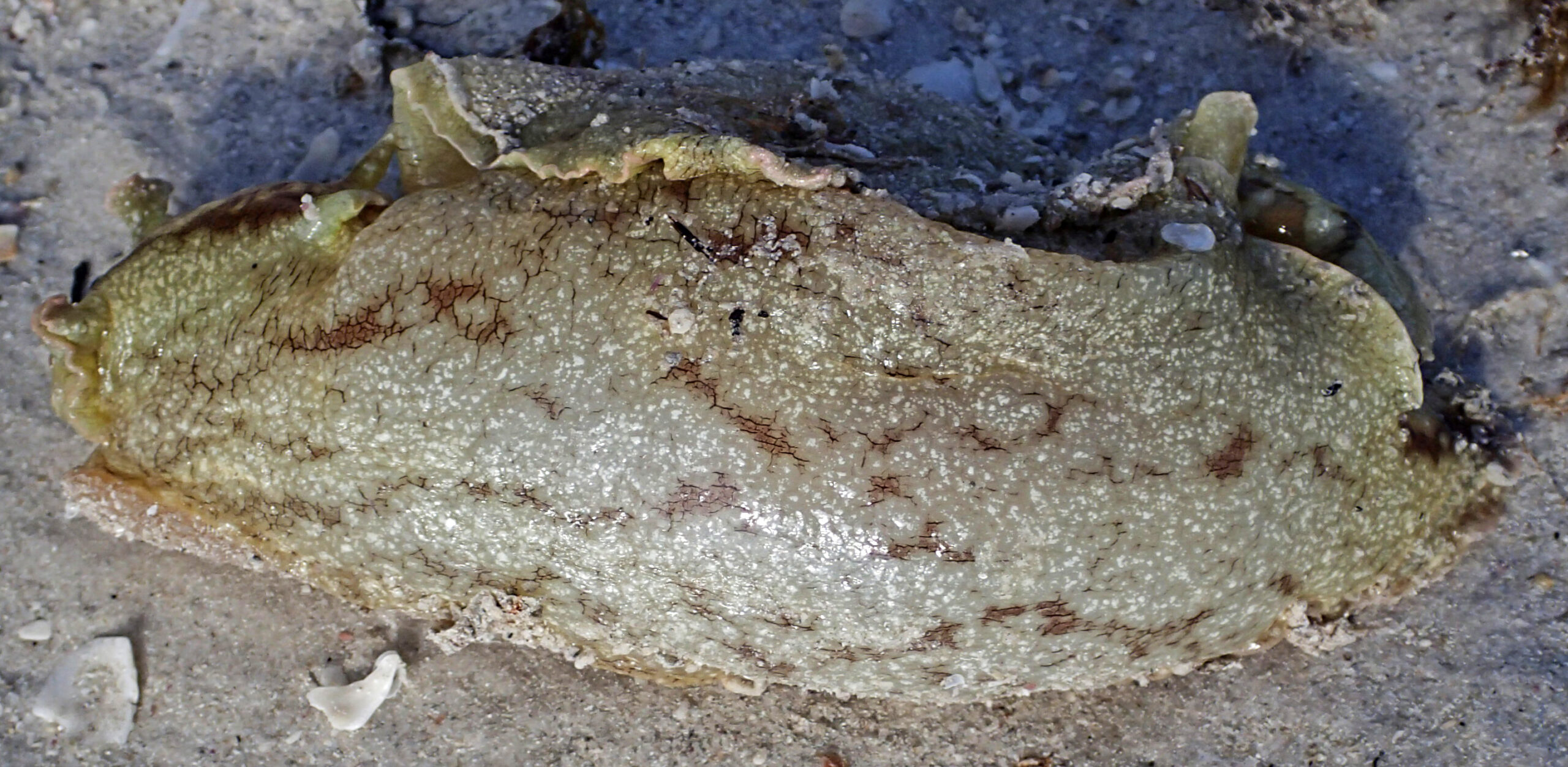
Sea Hare (Aplysia brasiliana)
Large sea slug that swims with gentle “wings” and may wash up after onshore winds. Can release purple ink when stressed.
- ID tips: Soft, mottled body; two “ear” rhinophores; no hard external shell.
- Behavior note: Grazes algae; swims with slow flaps; ink is harmless but stains.
- Respect & safety: Keep in water while observing; return immediately if stranded; rinse hands, avoid sunscreened hands on animals.
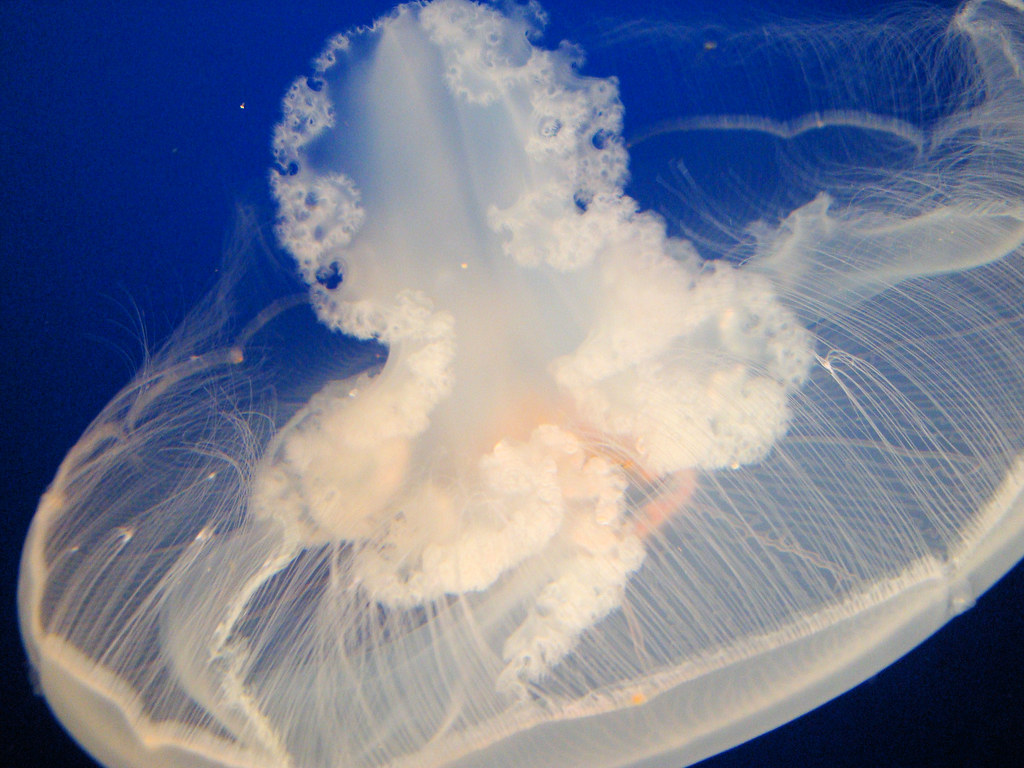
Moon Jelly (Aurelia spp.)
Translucent bell with four pale horseshoe shapes visible from above. Often drifts ashore in gentle waves.
- ID tips: Clear bell; four rounded “horseshoes” (gonads); short tentacles.
- Behavior note: Weak swimmer; blooms seasonally with currents and temps.
- Respect & safety: Avoid touching eyes/mouth after contact; some skins are sensitive. Photograph and let the tide take it.
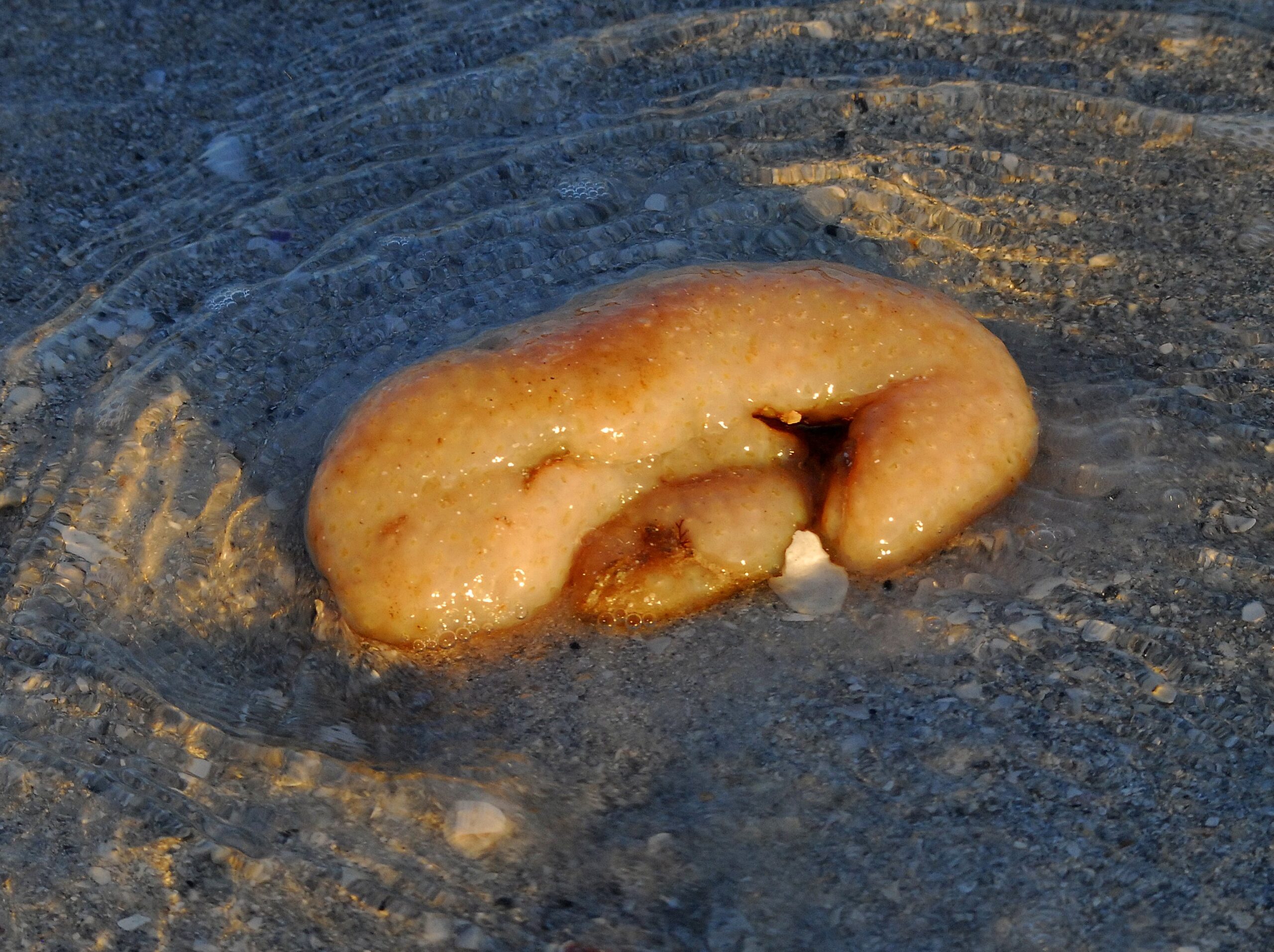
Sea Pork (Tunicate colonies) (Aplidium spp.)
Rubber-like blobs or mats in oranges, pinks, and browns—colonies of simple filter feeders. Common wrack surprise after storms.
- ID tips: Gelatinous/rubbery texture; uniform color patches; no obvious arms/shell.
- Behavior note: Attached filter feeders; fragments wash up detached after rough seas.
- Respect & safety: Slippery on rocks; avoid handling if you have cuts; leave attached colonies alone.
Love what you’re finding?
Check tides, move slowly, and leave living creatures in the water. We’re building quick ID cards for kids & beach walkers.