
Butterflies & Insects
Colorful pollinators and common dragonflies around shorelines.
How to enjoy & learn
Work the edges—pond margins, mangrove boardwalks, and sunlit garden paths. Calm mornings favor butterflies on nectar and host plants; bright midday brings dragonflies to perches over still water. Watch behavior first: slow nectar loops, hovering patrols, and flag-like perches in the breeze.
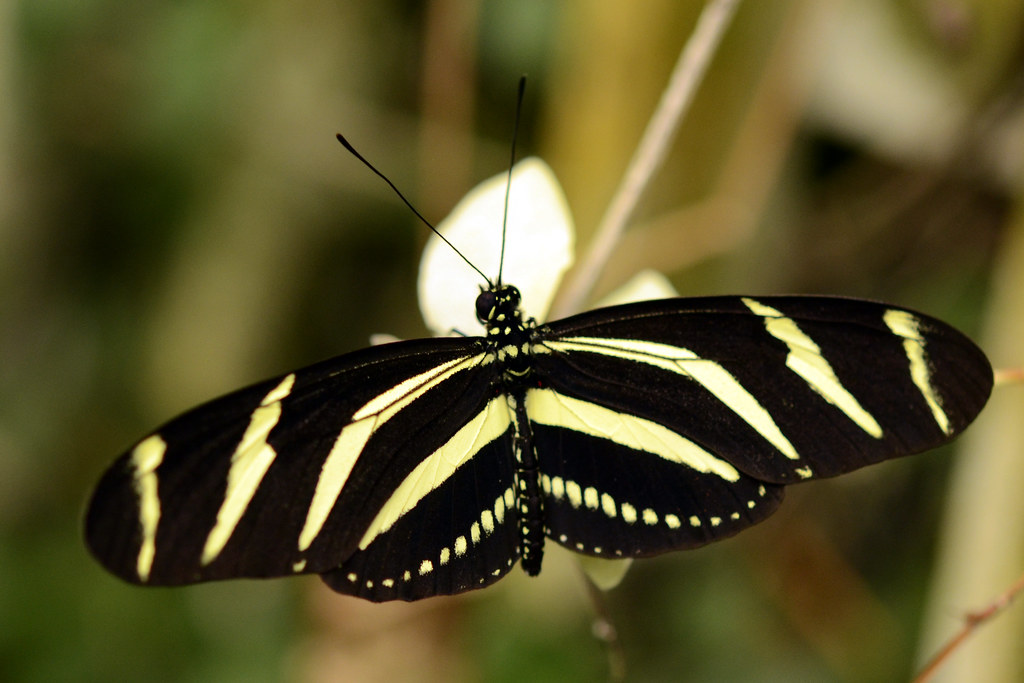
Zebra Longwing (Heliconius charithonia) — Florida’s state butterfly
Slow, deliberate flier that lingers over passionvine and shaded nectar patches. Follow the unhurried figure-eights along hedges—the stripes flash even under cover.
- ID tips: Long narrow wings with creamy yellow stripes on chocolate-brown; gentle, floating flight.
- Behavior note: Often feeds and roosts communally; loyal to nectar routes in calm weather.
- Respect & safety: Plant native passionvine; avoid pesticides near host/nectar plants.
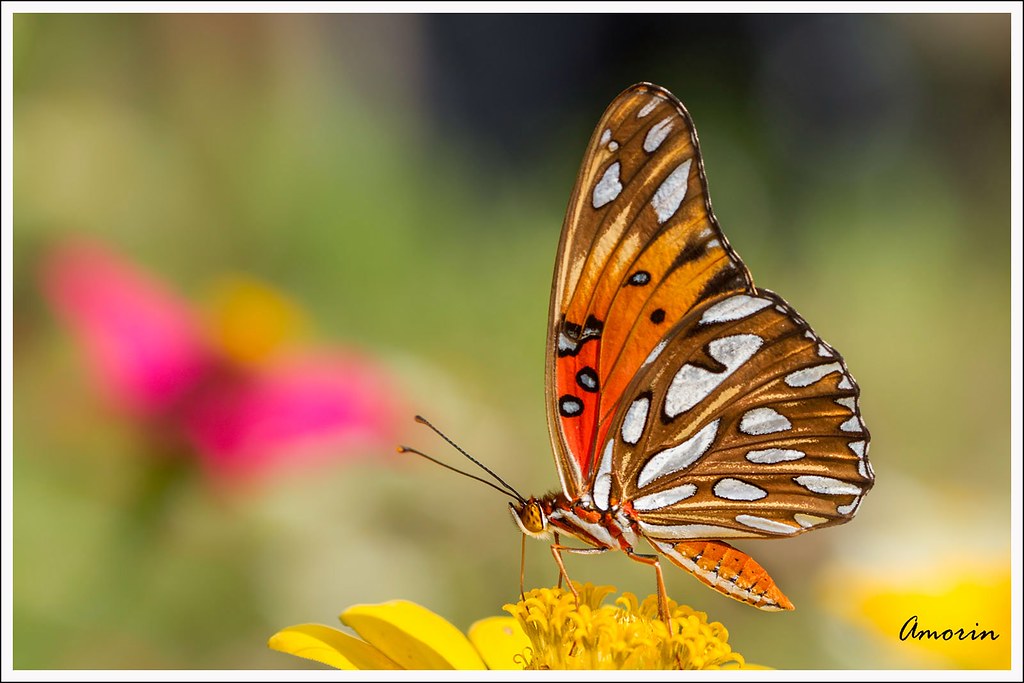
Gulf Fritillary (Agraulis vanillae)
Bright orange sprite with a fast, level glide. When it closes wings, the metallic silver spots flash like mirrors—easy pick-up along dune edges and butterfly gardens.
- ID tips: Pumpkin-orange above; silver spotted underwings; narrow shape.
- Behavior note: Cruises linear flowerbeds; lays eggs on passionvine.
- Respect & safety: Leave a few passionvine leaves “messy” for caterpillars; limit spraying.
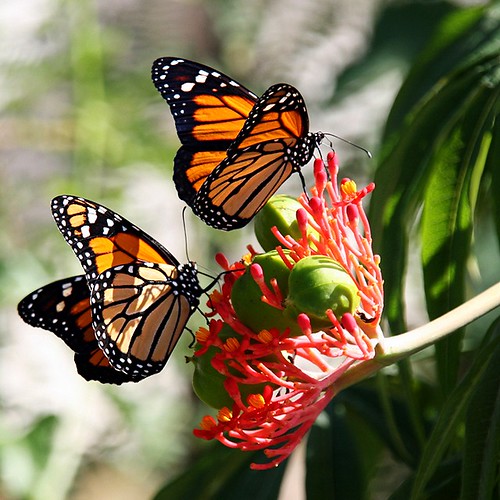
Monarch (Danaus plexippus)
Iconic migrant working milkweed waystations and roadside nectar. Watch the steady wingbeats, brief nectar stops, and purposeful push on tailwinds.
- ID tips: Orange with bold black veins and white-spotted borders; larger and slower than the Queen.
- Behavior note: Seeks milkweed for larvae; uses saltbush, lantana, and seaside goldenrod for nectar.
- Respect & safety: Plant native milkweeds; avoid cutting host plants during active breeding.
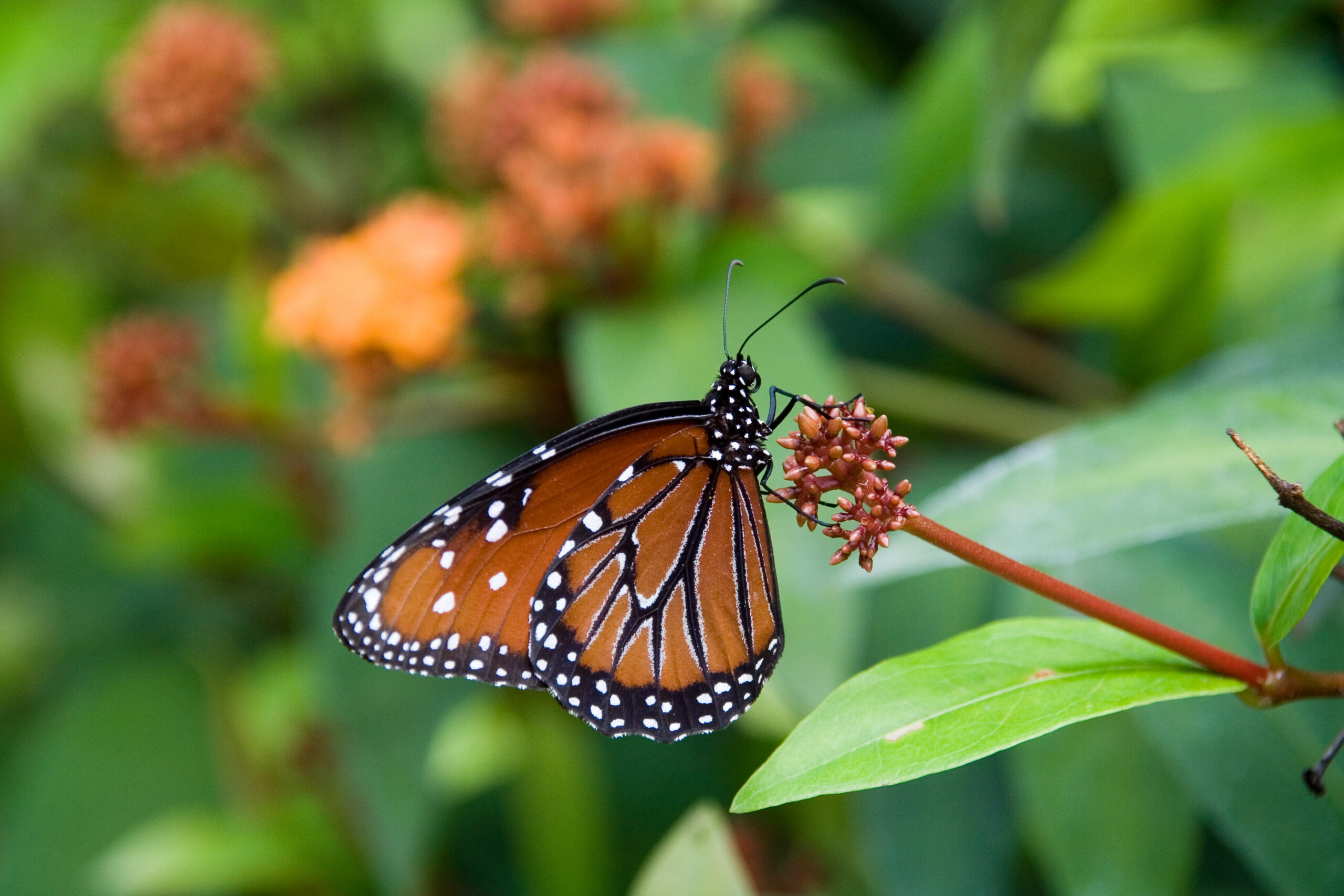
Queen (Danaus gilippus)
Monarch’s earth-toned cousin. Rich mahogany wings with neat white forewing spots; less contrast in the veins. Often lower and tighter to flowers than migrants overhead.
- ID tips: Darker, more uniform orange-brown; crisp white forewing spots; subtler veining than Monarch.
- Behavior note: Lingers on patches of milkweed, mistflower, and saltbush.
- Respect & safety: Keep a nectar sequence across seasons; avoid wind-tunnel plantings.
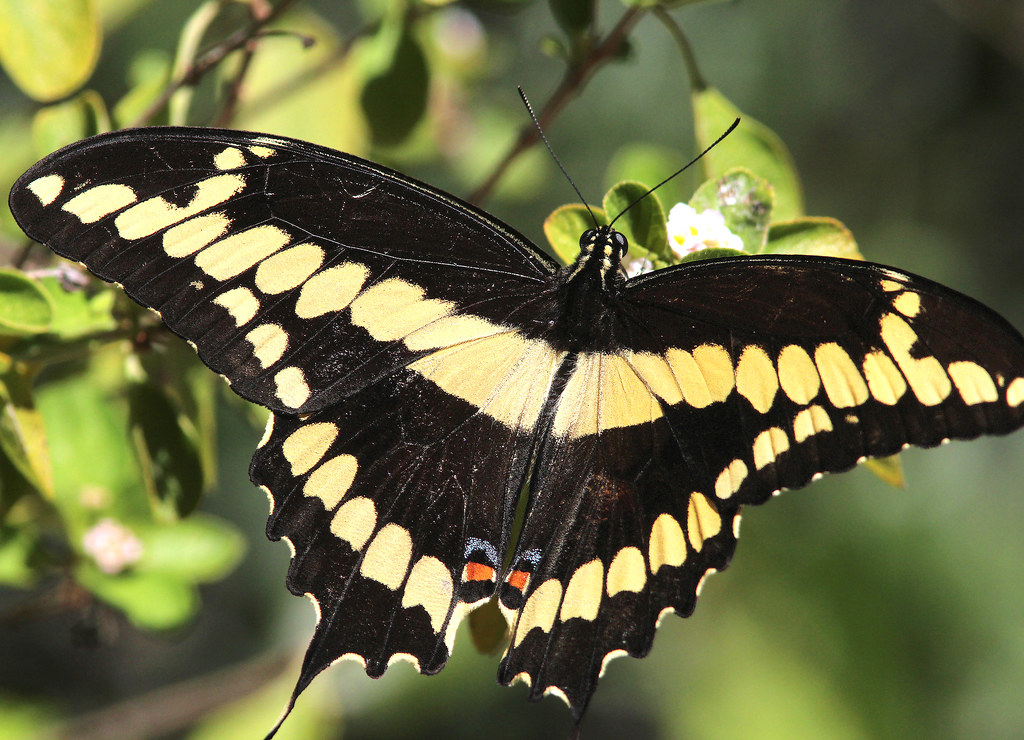
Giant Swallowtail (Papilio cresphontes)
Big shadow drifting over citrus and sunny openings. The lazy flap-glide draws a clean arc; the yellow bands flash when the wings roll to light.
- ID tips: Very large; yellow diagonal bands above; long tails.
- Behavior note: Flap-glide patrol over citrus and native rue relatives.
- Respect & safety: Mix host plants with nectar sources; leave sun pockets for flight lanes.
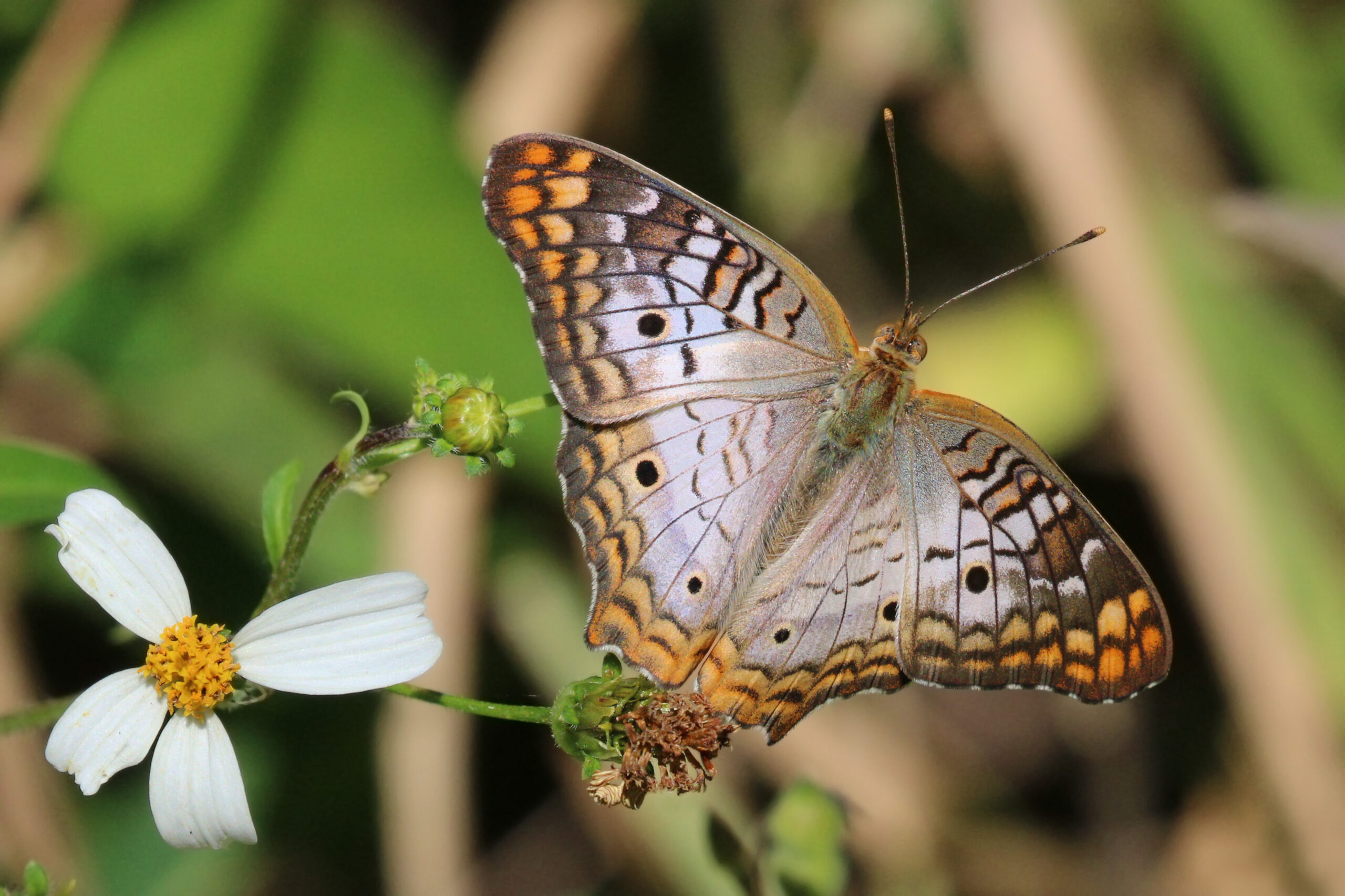
White Peacock (Anartia jatrophae)
Resident shore-walker. Look for low patrols over short grass near water, with soft eye-spots and creamy panels catching light.
- ID tips: Cream-white wings with tan/orange panels and small eye-spots.
- Behavior note: Ground-level nectaring and short, repeated circuits along banks.
- Respect & safety: Keep a mowed ribbon beside native plantings for easy viewing.
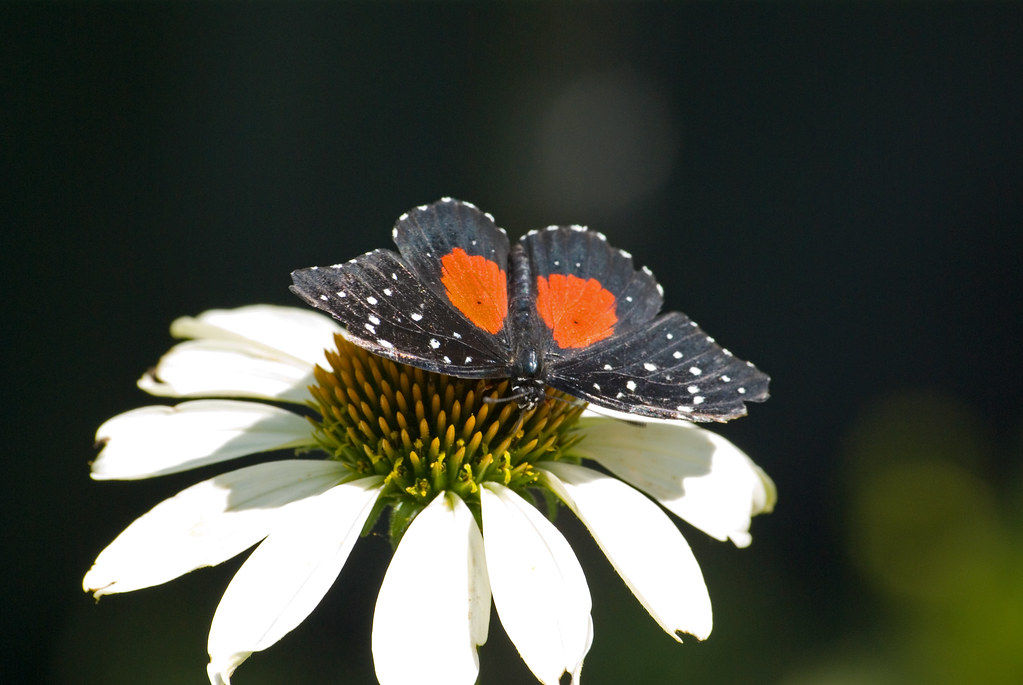
Atala (Eumaeus atala)
Coontie specialist with velvet black wings, electric blue dusting, and a tiny fire-red abdomen. Finds new habitat where people plant the host.
- ID tips: Black wings with subtle blue; red abdomens; compact size.
- Behavior note: Tied to Zamia integrifolia (coontie); clusters near plantings.
- Respect & safety: Plant pesticide-free coontie; avoid trimming during active larval stages.
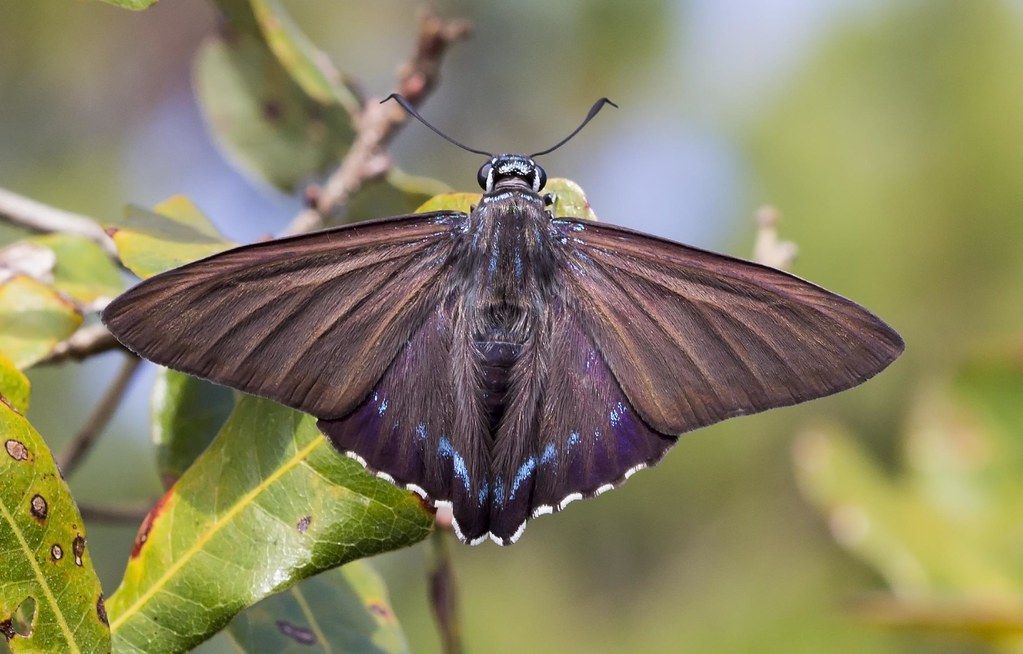
Mangrove Skipper (Phocides pigmalion)
Thick-bodied speedster that zips low along mangrove shade lines, pausing at sunny gaps like a runner catching breath.
- ID tips: Dark wings with pale spot row; robust skipper shape and rapid dash.
- Behavior note: Tracks mangrove corridors; quick nectar stops at edges.
- Respect & safety: View from boardwalks; avoid trampling pneumatophores and seedlings.
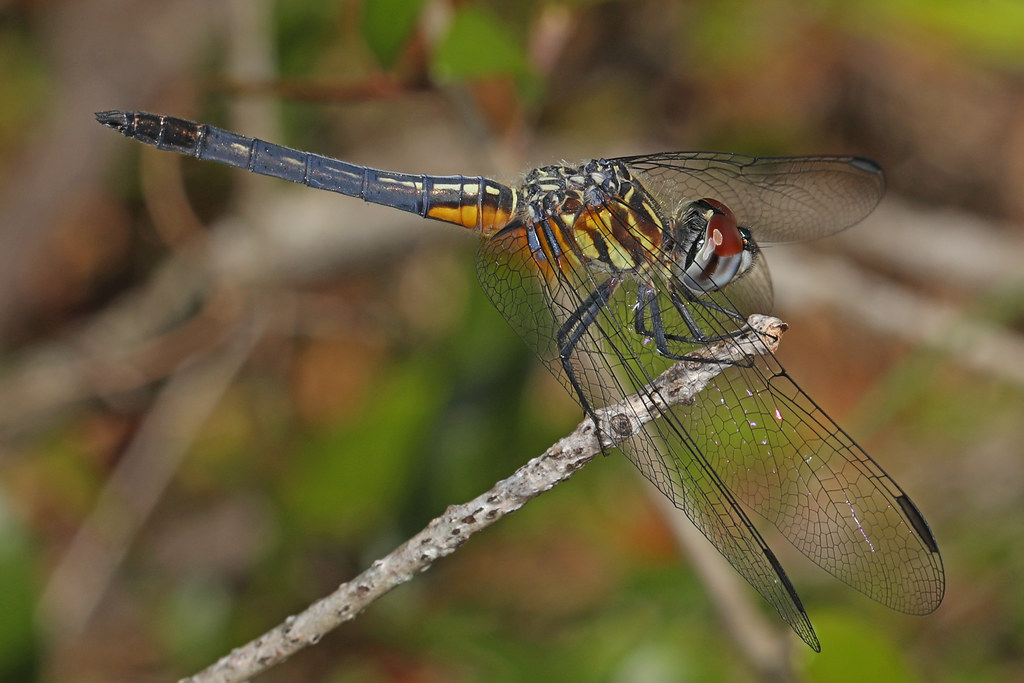
Blue Dasher (Pachydiplax longipennis)
Dock-guard on patrol. Short sallies from a favorite reed, quick snaps at midges, then right back to the same perch.
- ID tips: Powder-blue abdomen (adult male); striped thorax; clear wings.
- Behavior note: Returns to a chosen post repeatedly—great for photos.
- Respect & safety: Approach low and slow; avoid knocking perches at the water’s edge.
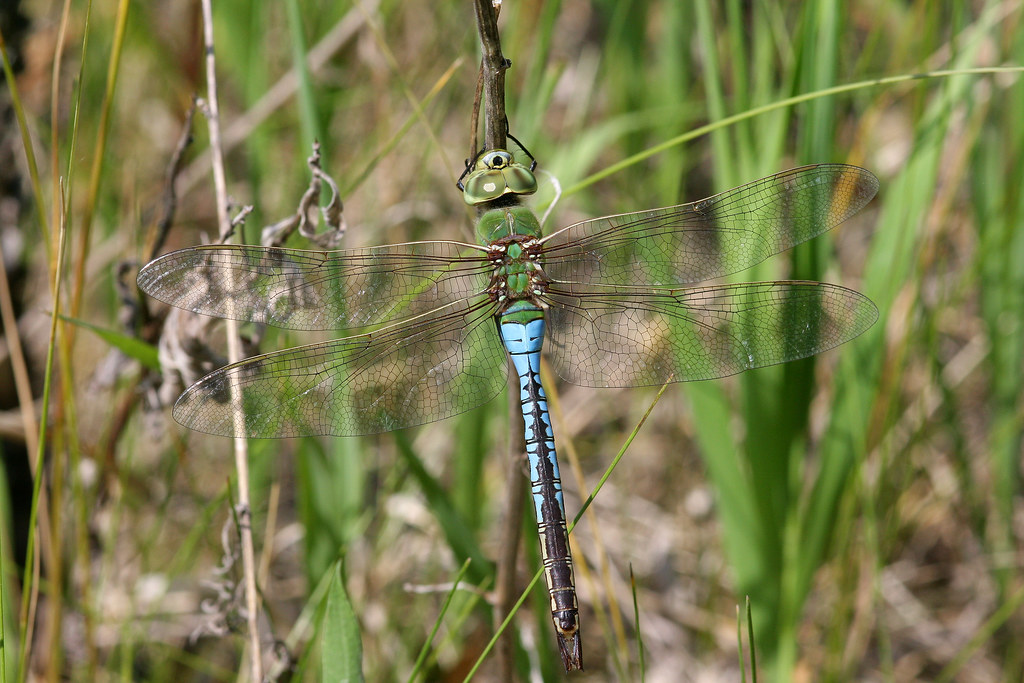
Common Green Darner (Anax junius)
The falcon of ponds—big, fast, and fond of the open. On breezy days watch for migration lines pushing along shore.
- ID tips: Bright green thorax; long abdomen; powerful, swift flight.
- Behavior note: Hunts on the wing; pairs often seen in tandem over water.
- Respect & safety: Give space at launch points; avoid casting lines into active groups.
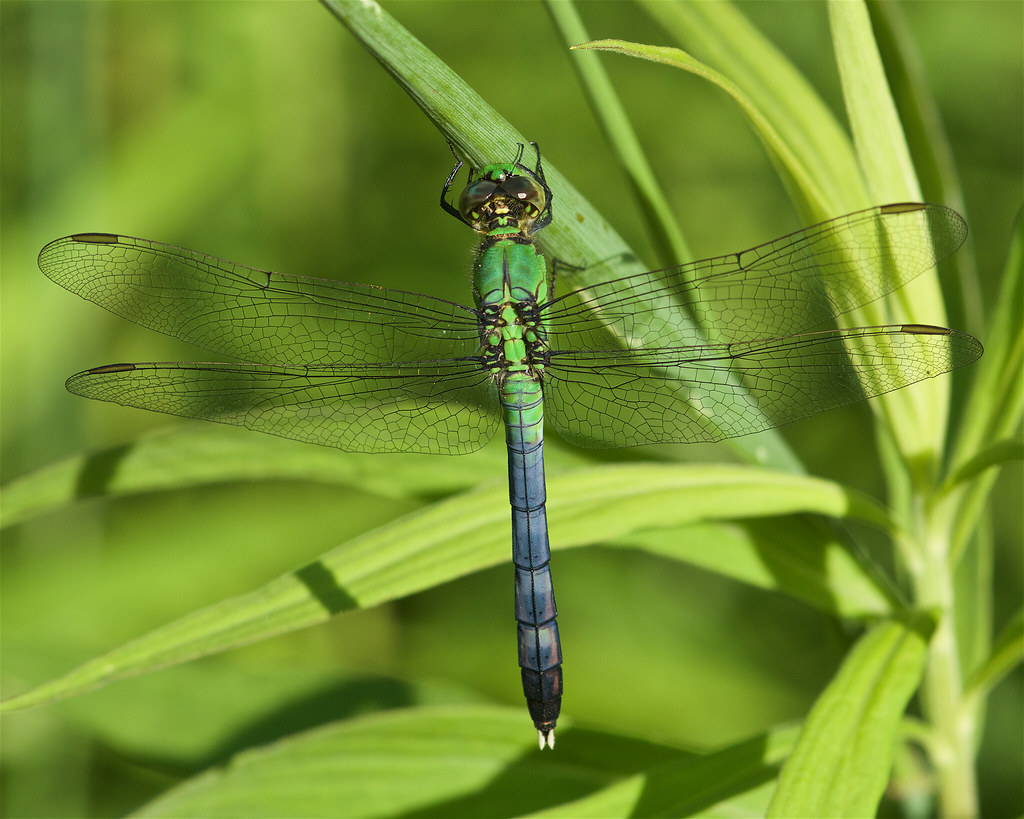
Eastern Pondhawk (Erythemis simplicicollis)
Pugnacious little hunter that works low over grass and sticks near shore, grabbing anything smaller than it is.
- ID tips: Males powder-blue; females green with dark abdominal pattern; clear wings.
- Behavior note: Aggressive to other dragonflies around chosen perches.
- Respect & safety: Watch footing on slick banks; keep children back from steep rims.
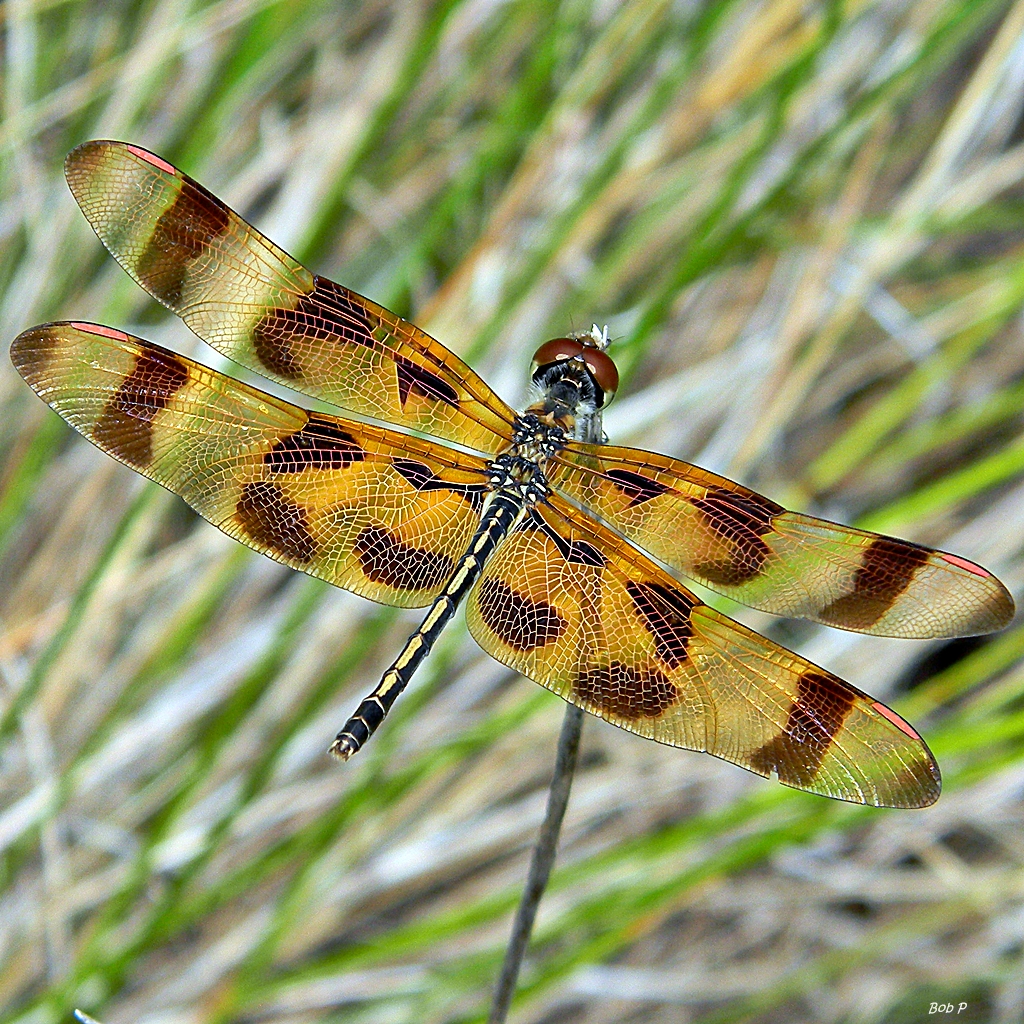
Halloween Pennant (Celithemis eponina)
Flag on a reed. Broad, banded wings tilt like kites as it rides the breeze—easy to spot even for beginners.
- ID tips: Orange-to-amber wings with dark bands; perches at the tip of stems.
- Behavior note: Sways with gusts, making short forays for midges above the water.
- Respect & safety: Photograph from the path; avoid brushing through reed tips.
Love what you’re seeing?
Plant natives, leave a little wild edge, and bring a camera. We’re building games & field quizzes to make ID even easier.