
Birds of the Coast & Flats
Wading birds, seabirds, and raptors you’ll spot on coasts and tidal flats.
How to enjoy & learn
Start where water meets edge—mangroves, oyster bars, sand spits, and piers. Watch behavior first, then details: bill color/shape, leg color, hunting style, and calls overhead. Give feeding and nesting birds room so they can keep doing their thing. Binoculars beat walking closer; patience beats chasing.
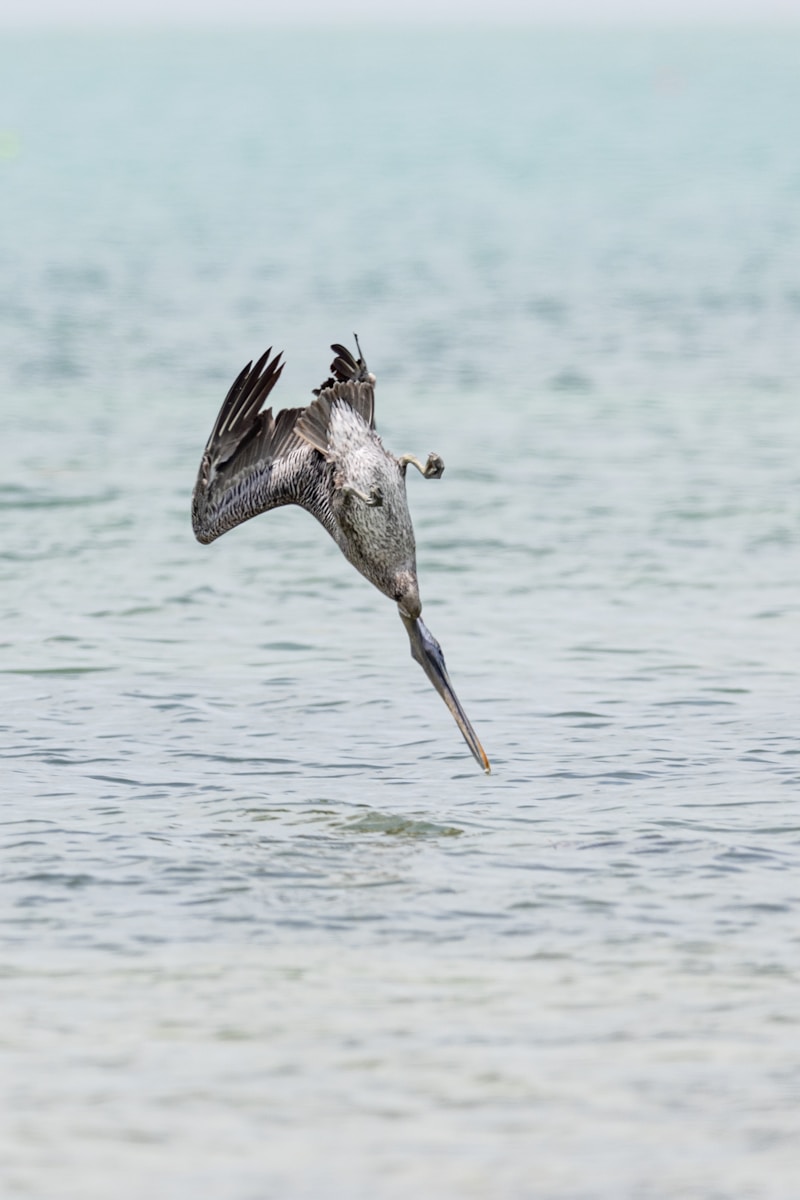
Brown Pelican (Pelecanus occidentalis)
A classic of Gulf mornings, pelicans ghost inches above the surface, reading tiny wind lines and bait flips. Around piers, ramps, and bridge shadows they work the same structure we do, timing plunge-dives with current seams. Adults show a pale/yellowish head, and in breeding season the neck warms with richer tones. Watch how they raft up in slack tide, then rise one by one as bait gets pushed by tide or wind—almost like an air-traffic pattern over the water.
- ID tips: Big, heavy-bodied seabird; long pouch bill; dramatic headfirst dives followed by a pause to drain the pouch.
- Behavior note: Immatures practice “follow the leader,” learning where scraps and bait concentrate near anglers.
- Respect & safety: Your ramp reality check matters: avoid treble hooks when possible, keep an eye on wind drift, never toss bait to birds. If a pelican is hooked, don’t cut and leave line—secure your rod, gently hand-line, and get help de-hooking so line doesn’t cinch around wings or bill.
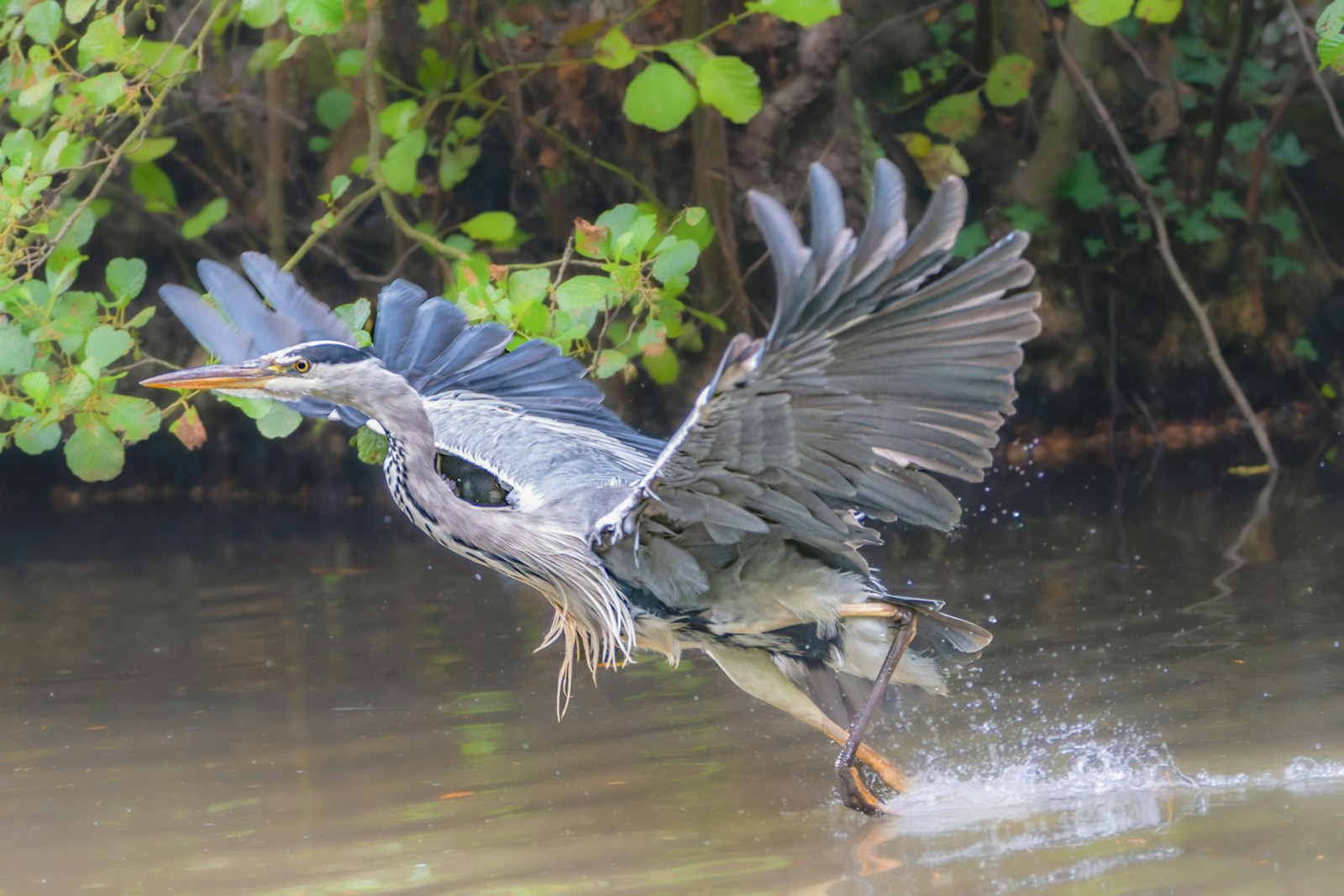
Great Egret (Ardea alba)
The old salty fisherman in bird form—posted alone, reading current and angle of sun, letting bait reveal itself. It stands motionless until the flat comes alive, then strikes with a lightning jab. If one’s hunting a shoreline, the system is working: glass minnows, shrimp, and small mullet are sliding with the tide, and predators won’t be far. That raspy lift-off squawk you hear? It saw you first.
- ID tips: Tall, pure white; all-yellow bill and black legs (separates it from snowy egret’s yellow feet and black bill).
- Behavior note: Prefers space; will step away from pressure rather than spar with other egrets.
- Respect & safety: Approach from down-sun with calm movements; avoid rookeries entirely in nesting season so adults don’t abandon exposed chicks.
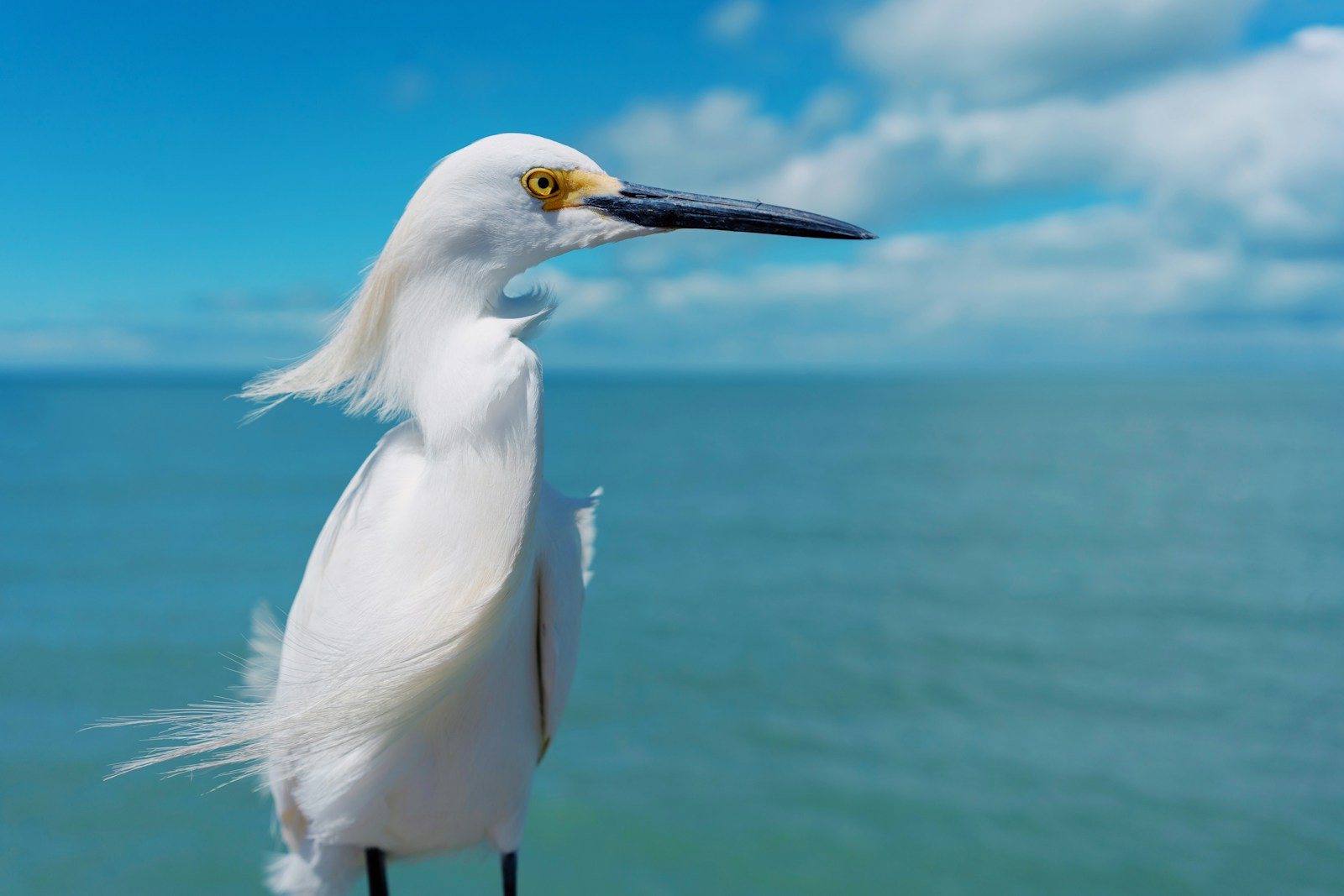
Snowy Egret (Egretta thula)
Ramp regular and fearless deckhand, the snowy will hop aboard and eye your livewell like part of the crew. On the flats it works fast—short runs, foot-stirring to flush shrimp, then a precision stab. If another snowy crowds the zone, you’ll see personality flare: raised plumes, quick darts, a little side-eye. Small bird, big energy.
- ID tips: Petite, bright white; black bill + black legs with unmistakable yellow “golden slipper” feet.
- Behavior note: Associates with boats for easy meals—one reason hooks at ramps become an issue.
- Respect & safety: Please don’t feed; stow trebles, keep lines tight, and leave rookeries undisturbed.
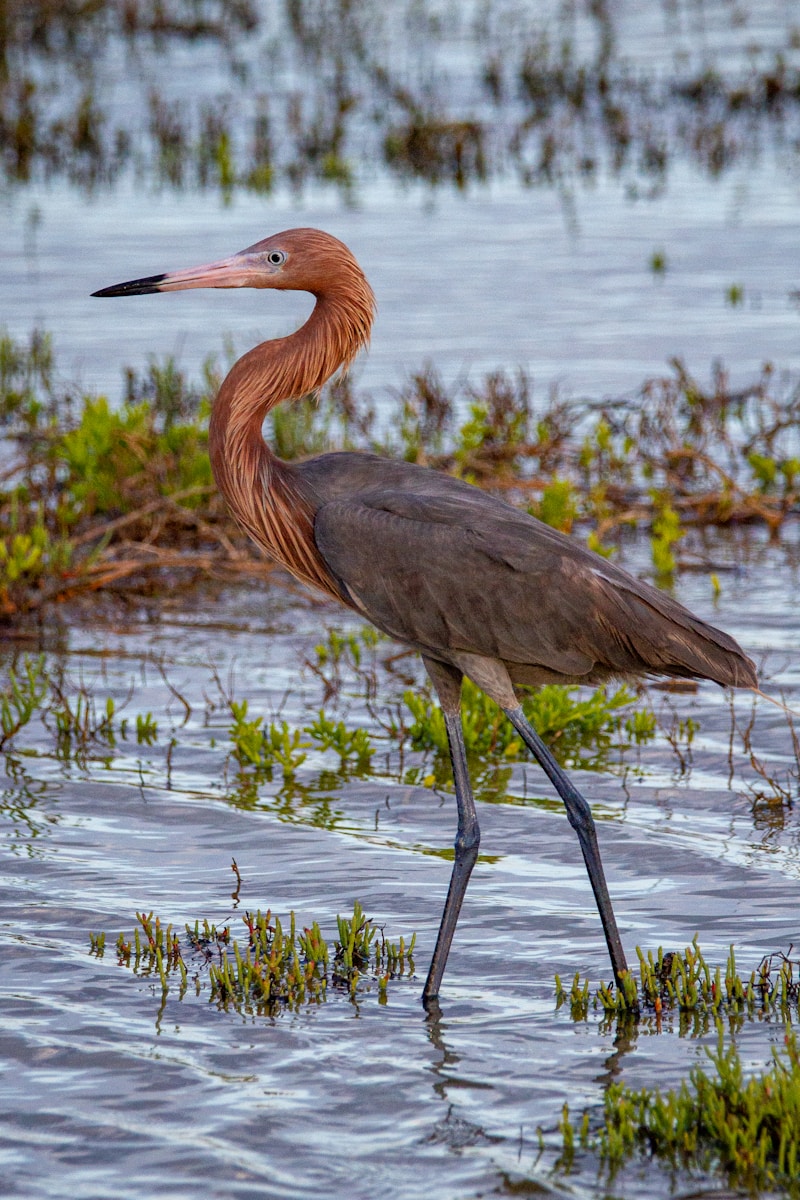
Reddish Egret (Egretta rufescens)
If you see a heron “dance,” you’ve met the reddish. It throws a cape of shadow with its wings, sprints in zig-zags, and freezes the next instant—chaos choreographed to stun baitfish. Scarcer than other egrets, it prefers open, shallow flats where a little glare helps it see. There’s a rarer all-white morph; the hunt style gives it away.
- ID tips: Shaggy rust-red head/neck, gray body, pink-and-black bill; long dark legs.
- Behavior note: Feeds alone; energy-intense style means repeated flushes can shut it down.
- Respect & safety: View from the water’s edge and keep dogs leashed; let a working bird finish its flat.
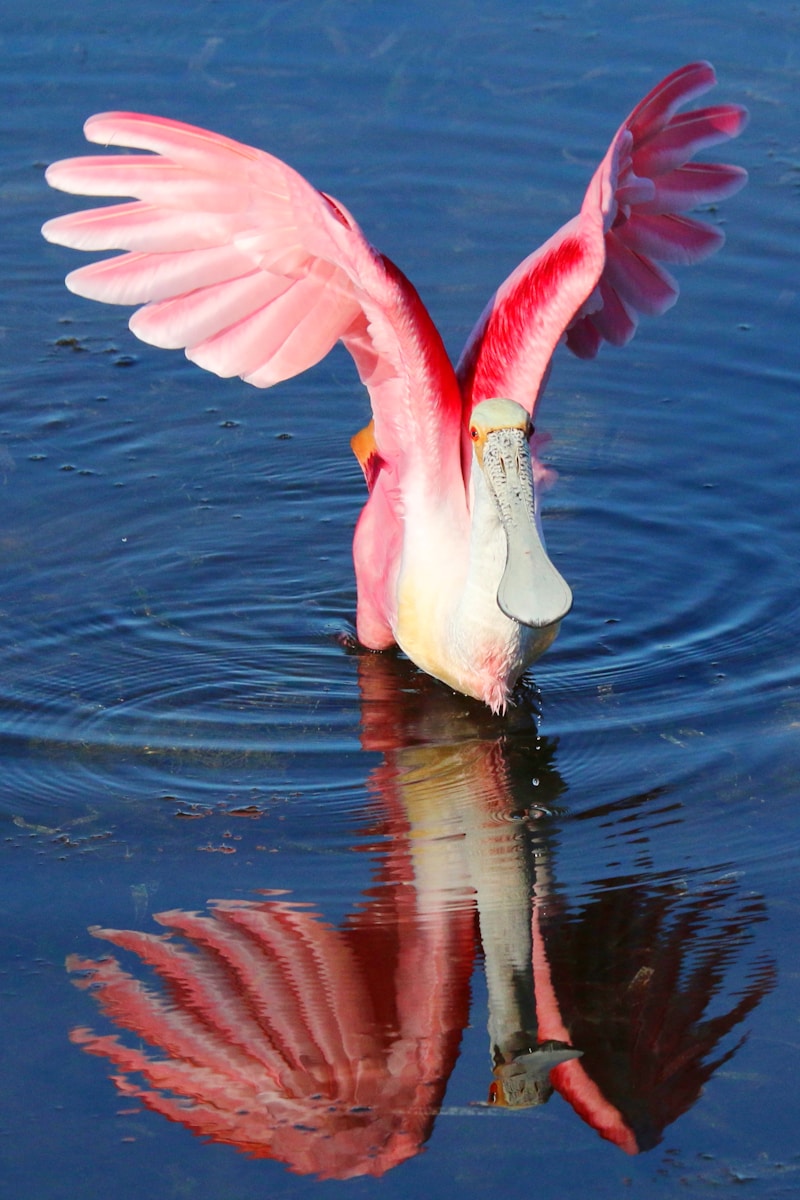
Roseate Spoonbill (Platalea ajaja)
A shy showstopper. The spoon-shaped bill sweeps side-to-side, snapping the instant it touches something edible. In early or late light the pinks glow—peony to salmon to hot rose along the wings. Often mixed with ibis in quiet ponds; easy to pick out, quick to slip away if you crowd.
- ID tips: Pink body and wings; long spoon bill; bare greenish head; flies with neck outstretched.
- Behavior note: Feeds by touch more than sight; turbid, shallow water is a plus.
- Respect & safety: Give feeding groups and roosts space; obey seasonal closures at nesting sites.
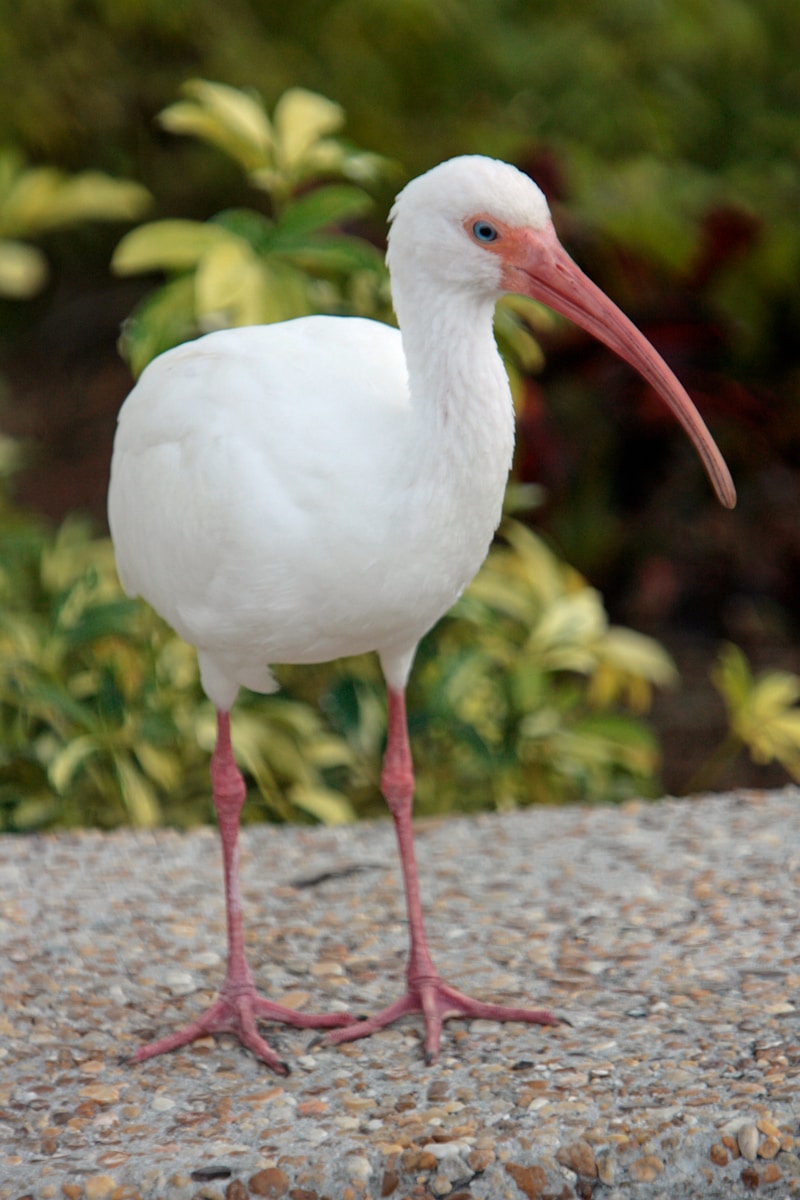
White Ibis (Eudocimus albus)
Neighborhood ambassadors. After a summer shower, a slow tide of white birds moves across lawns, probing for worms and insects. In the back bays they sweep shorelines in synchronized arcs—heads down, bills scissoring through shallow water. They’ve got deep history with people; today they’re a gentle signal that wetland pockets nearby are alive and connected.
- ID tips: White body; down-curved orange-red bill, pink legs; juveniles brown-streaked; black wing tips flash in flight.
- Behavior note: Favors numbers for safety; mixed flocks often include spoonbills or egrets.
- Respect & safety: Step wide of feeding lines, keep dogs leashed near ponds, and give colony trees extra room in heat.
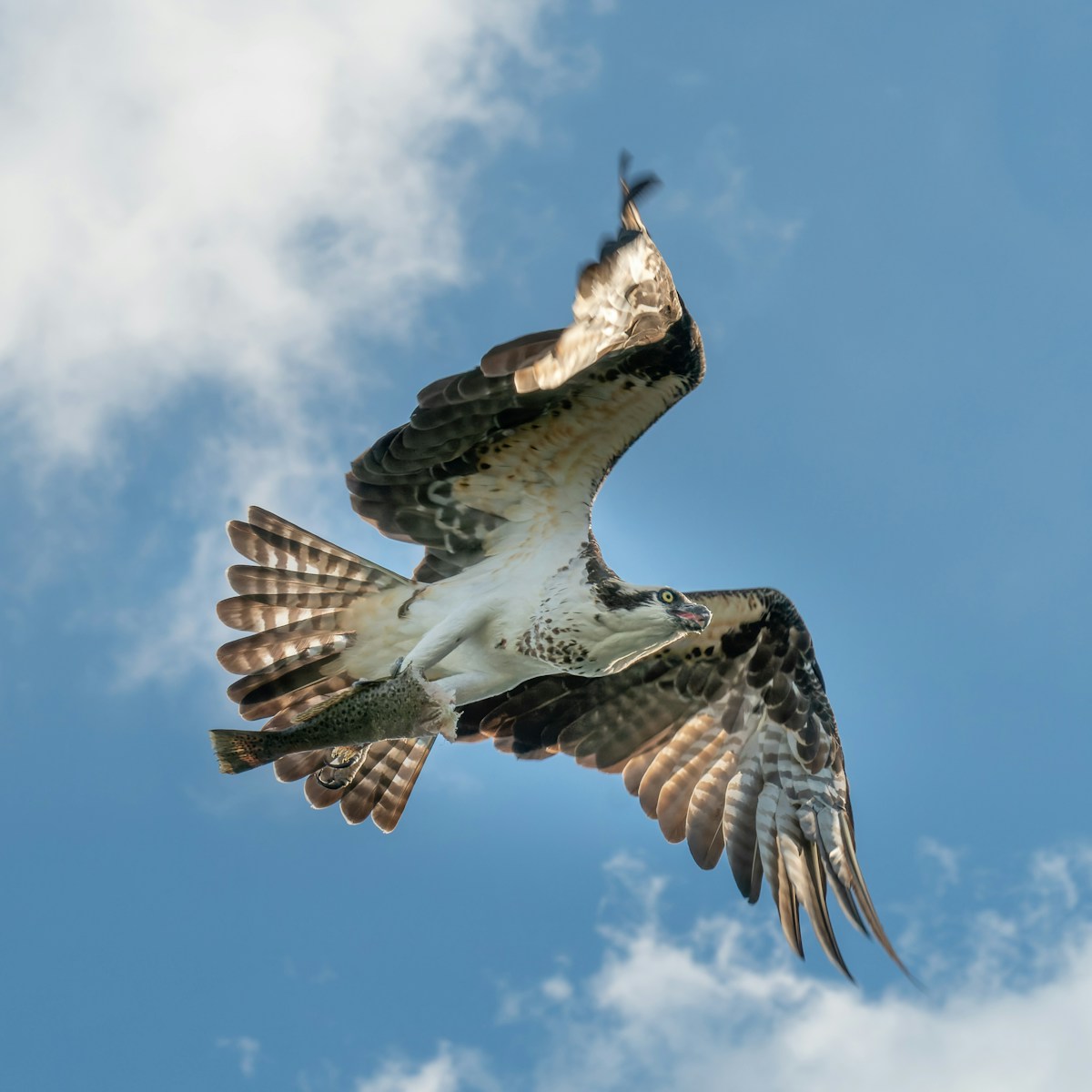
Osprey (Pandion haliaetus)
The bay’s soundtrack—sharp, repetitive screech—usually hits your ears before the bird does. Watch the stall: wings hold, head cocks, then a sudden fold into a splash and a heavy climb-out with a fish carried head-first to cut drag. Those reversible toes and spiky pads (spicules) are pure fish-raptor engineering.
- ID tips: Bold eye stripe; dark wrist patches; pale underparts; shallow “M” in glide.
- Behavior note: Pairs return to the same nests; platform etiquette matters during breeding.
- Respect & safety: Give nest platforms wide space; if an adult is calling repeatedly at you, back off. Collect stray line from markers when it’s safe.
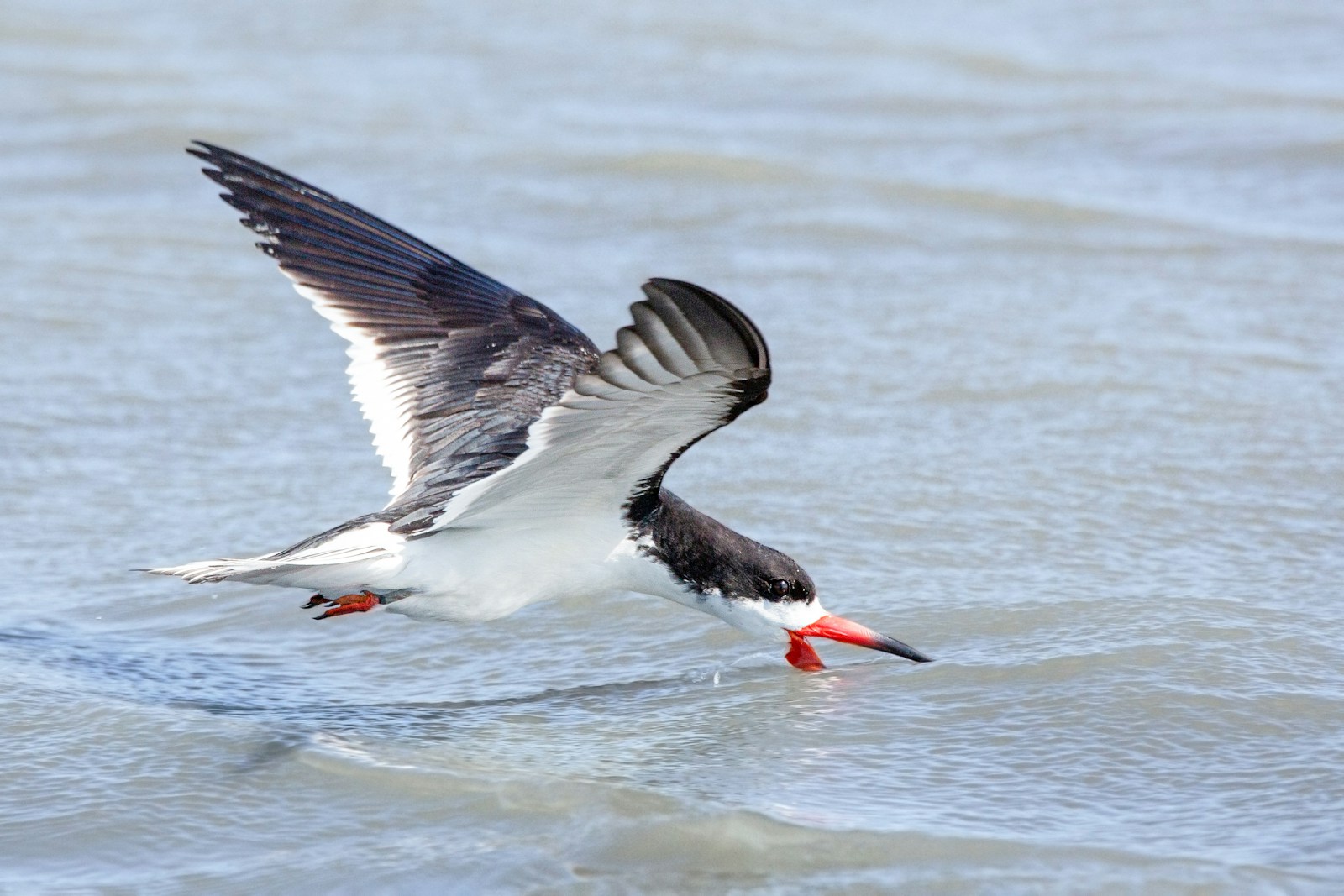
Black Skimmer (Rynchops niger)
Streetlights of the tide line. At first and last light, skimmers drift low and level in single file, the lower mandible blade slicing a furrow in the surface until it touches a baitfish and the bill snaps shut. On quiet sandbars they loaf in groups that look like tuxedos arranged in rows.
- ID tips: Black-and-white plumage; red-black bill with longer lower mandible; buoyant flight.
- Behavior note: Colony nester on open sand; eggs and chicks are nearly invisible.
- Respect & safety: Never enter roosts or taped areas. Keep dogs leashed and give wide berth at night—use a red light if you must pass.
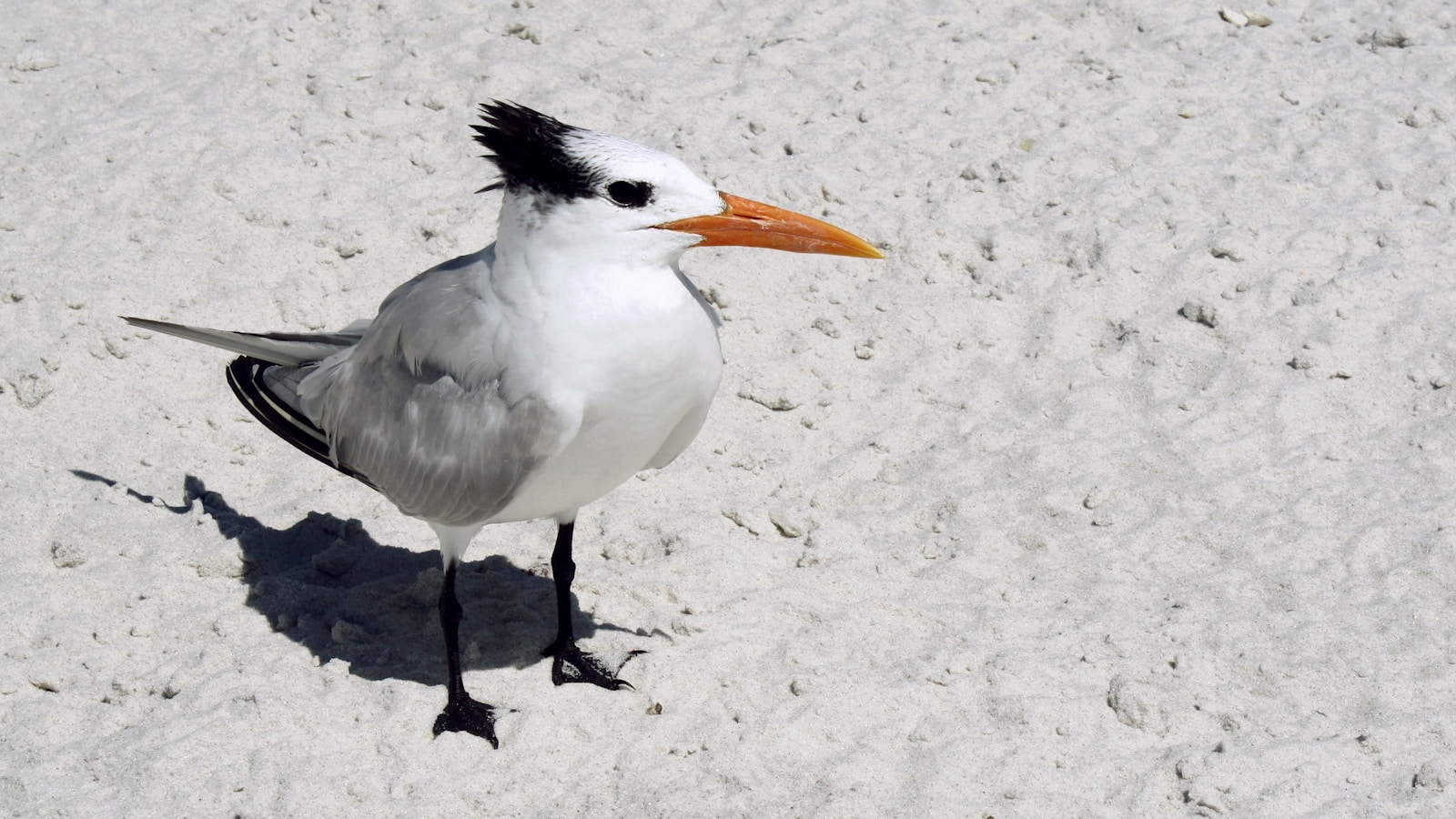
Royal Tern (Thalasseus maximus)
The rock-star crest gives them away even in a crowd. Royals hover briefly, tip the bill, then spear the surface in a clean plunge, trading places over surf lines like runway traffic. On mixed bars they stand taller than most terns and carry a stout orange bill—don’t confuse them with black skimmers, whose odd bill and skim-feed are a different show altogether.
- ID tips: Sleek pale gray-and-white tern; shaggy black crest “hairdo”; bold orange bill; shallow forked tail.
- Behavior note: Social; roosts shift with wind and tide—yesterday’s bar might be underwater today.
- Respect & safety: Don’t walk through tight roosts; one flush costs the whole flock energy. Obey posted colony closures.
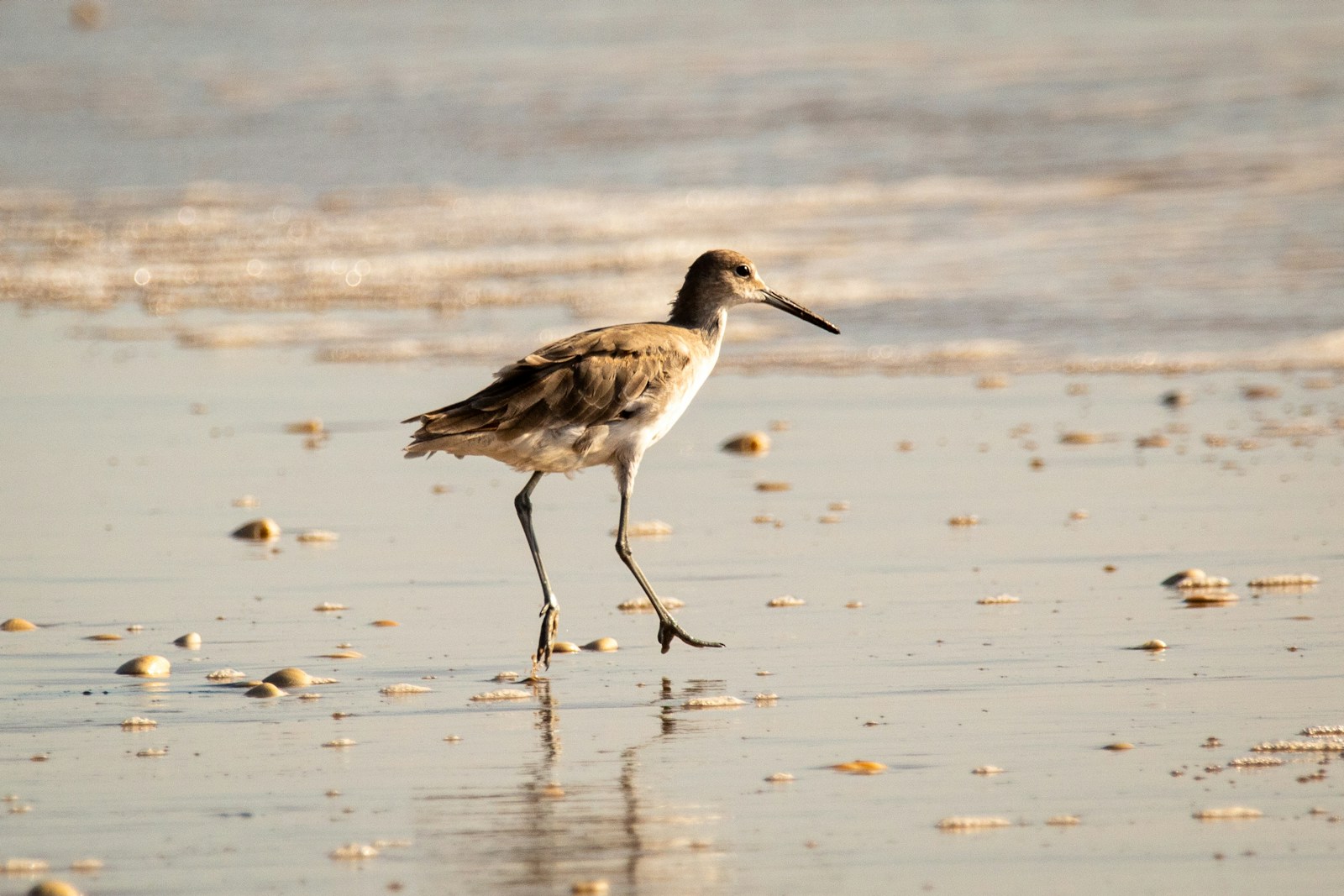
Willet (Tringa semipalmata)
The anxious-sounding wave-runner—always hustling between shorebreaks, snatching mole crabs and small invertebrates as waves retreat. In mixed company they mind their space but rarely pick fights; in nesting season they become bold guardians, and their ringing “pill-will-willet!” leaves no doubt you’ve crossed a line. Watch for downy chicks sprinting beside adults along calm lagoon edges.
- ID tips: Plain gray beachwalker with sturdy bill; in flight, explosive black-and-white wing bars that flash wide.
- Behavior note: Feeds on the run; favors the exact moment a backwash exposes prey.
- Respect & safety: Give nesting territories space and step wide of feeding lines so birds keep their rhythm.
Love what you’re seeing?
Bring binoculars, keep distance, and let the coast teach you. We’re building games & flash cards to make learning even easier.