
Reptiles & Amphibians

Reptiles & Amphibians

Gators, turtles, snakes, and chorus-making frogs you’re most likely to meet in Southwest Florida — plus how to spot them and give them the room they deserve.
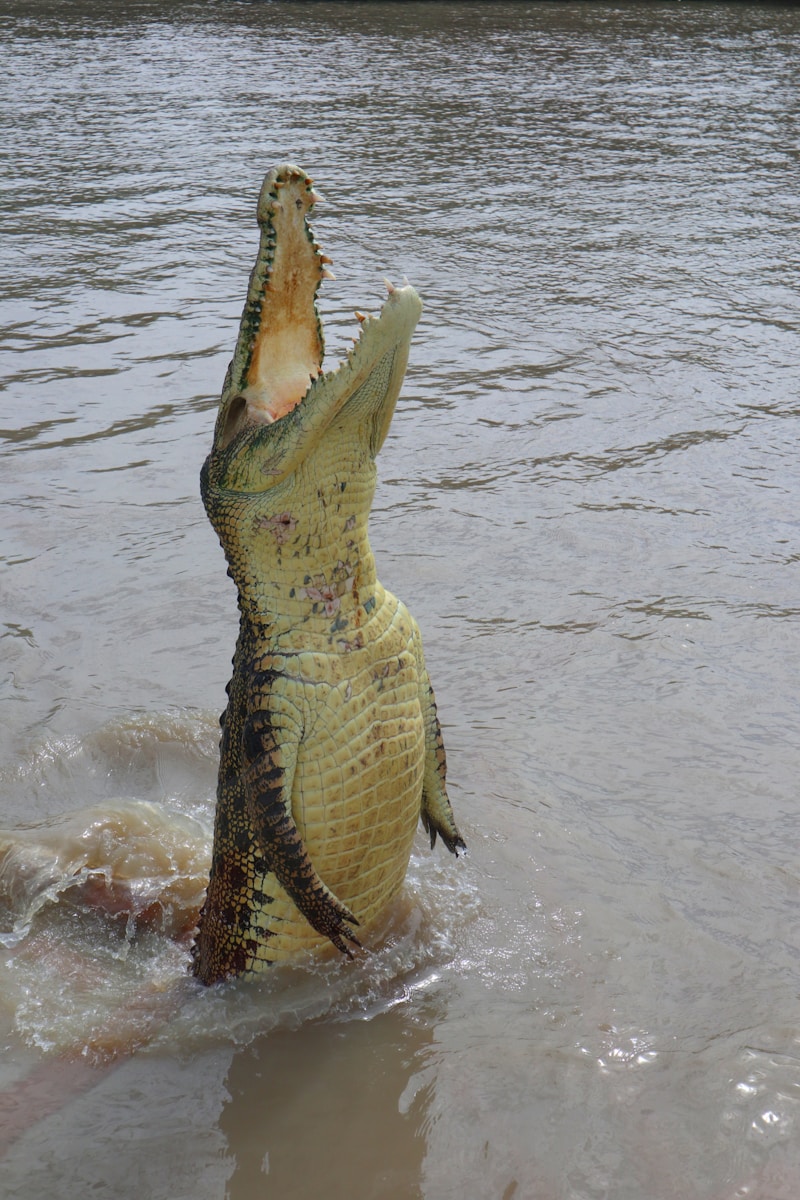
American Alligator

American Alligator Alligator mississippiensis

Florida’s most famous reptile and the heartbeat of our wetlands. Alligators spend warm hours basking, then patrol edges for fish, crayfish, and the occasional careless mullet. They’re shy but powerful; most encounters are a quick look and a gentle slide beneath the surface.
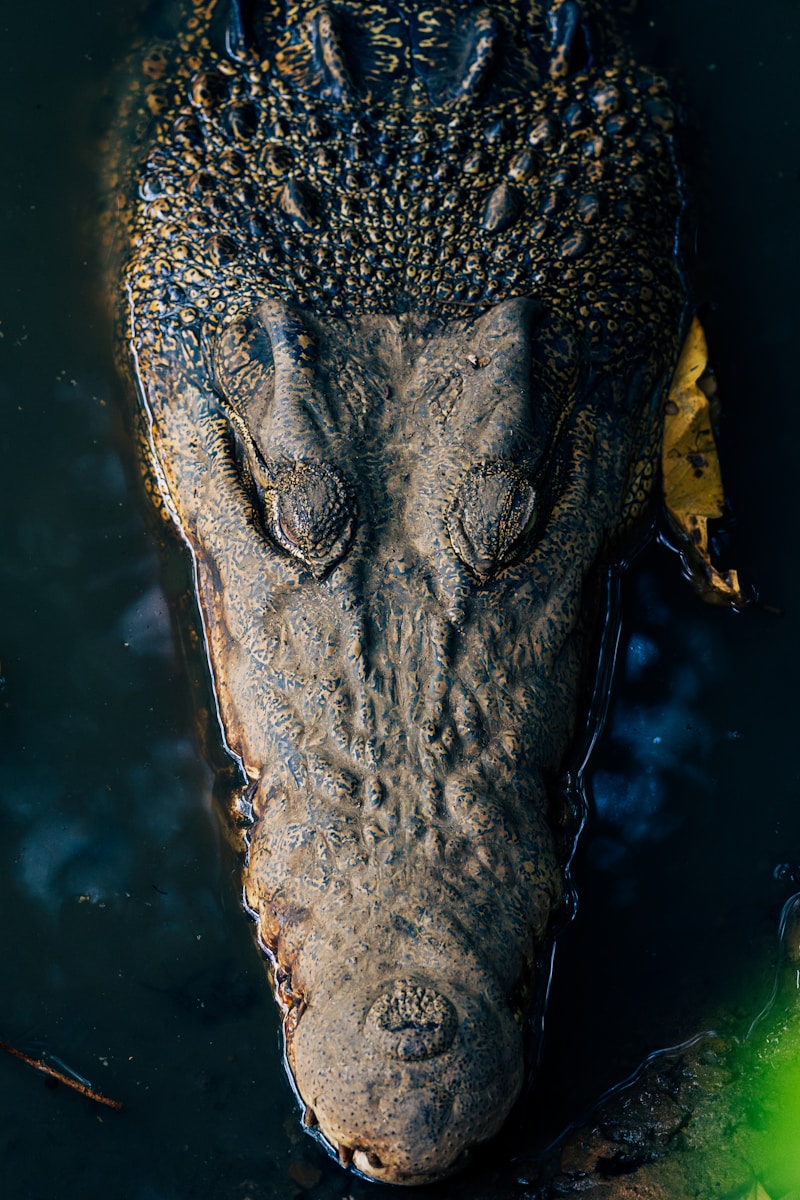
  • When & where: Freshwater marshes, ponds, canals, and golf-course lakes; most active dawn/dusk and on warm afternoons.
  • ID tips: Broad, rounded snout; only upper teeth visible when the mouth is shut; dark, armored tail with raised ridges.
  • Respect & safety: Observe from distance; never feed wildlife (it’s illegal and dangerous). Keep pets and hands out of the water’s edge, especially near culverts and vegetation mats.
American Crocodile

American Crocodile Crocodylus acutus

South Florida’s salt-tolerant cousin to the gator, rare but possible on our lower Gulf coast. Crocs prefer warm, brackish bays and coastal canals where tides bring easy fish meals.
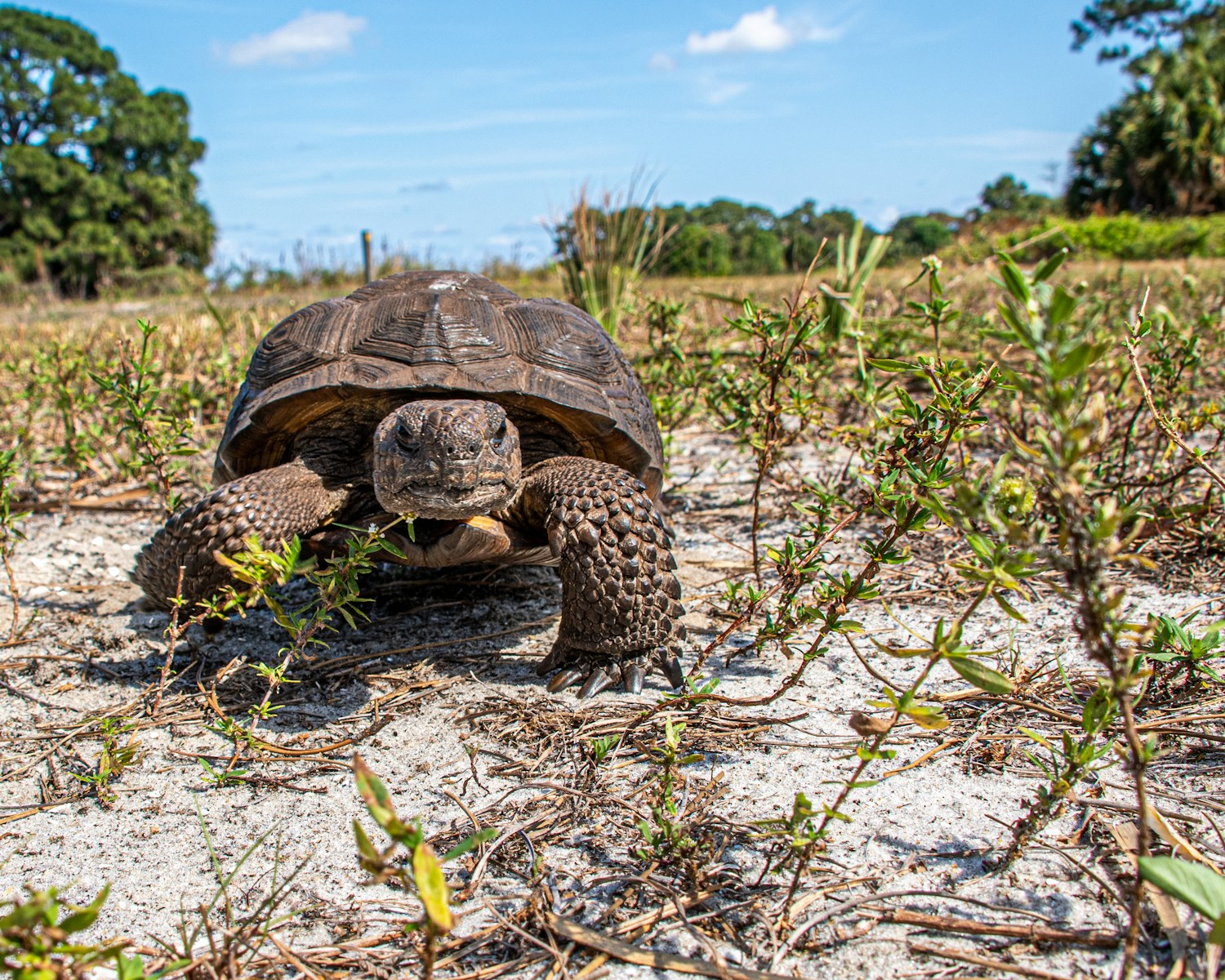
  • When & where: Lower estuaries, mangrove creeks, marinas with brackish flow; warm months and sunny banks.
  • ID tips: Slimmer, V-shaped snout; both upper and lower teeth visible when closed; often paler gray-green overall.
  • Respect & safety: Same rules as gators with extra space — crocs are federally protected. Give nest areas and basking sites a very wide berth.
Gopher Tortoise

Gopher Tortoise Gopherus polyphemus

Our land-dwelling tortoise engineers deep burrows in sandy uplands and dune scrub. Those burrows shelter hundreds of other species, making the tortoise a keystone neighbor.
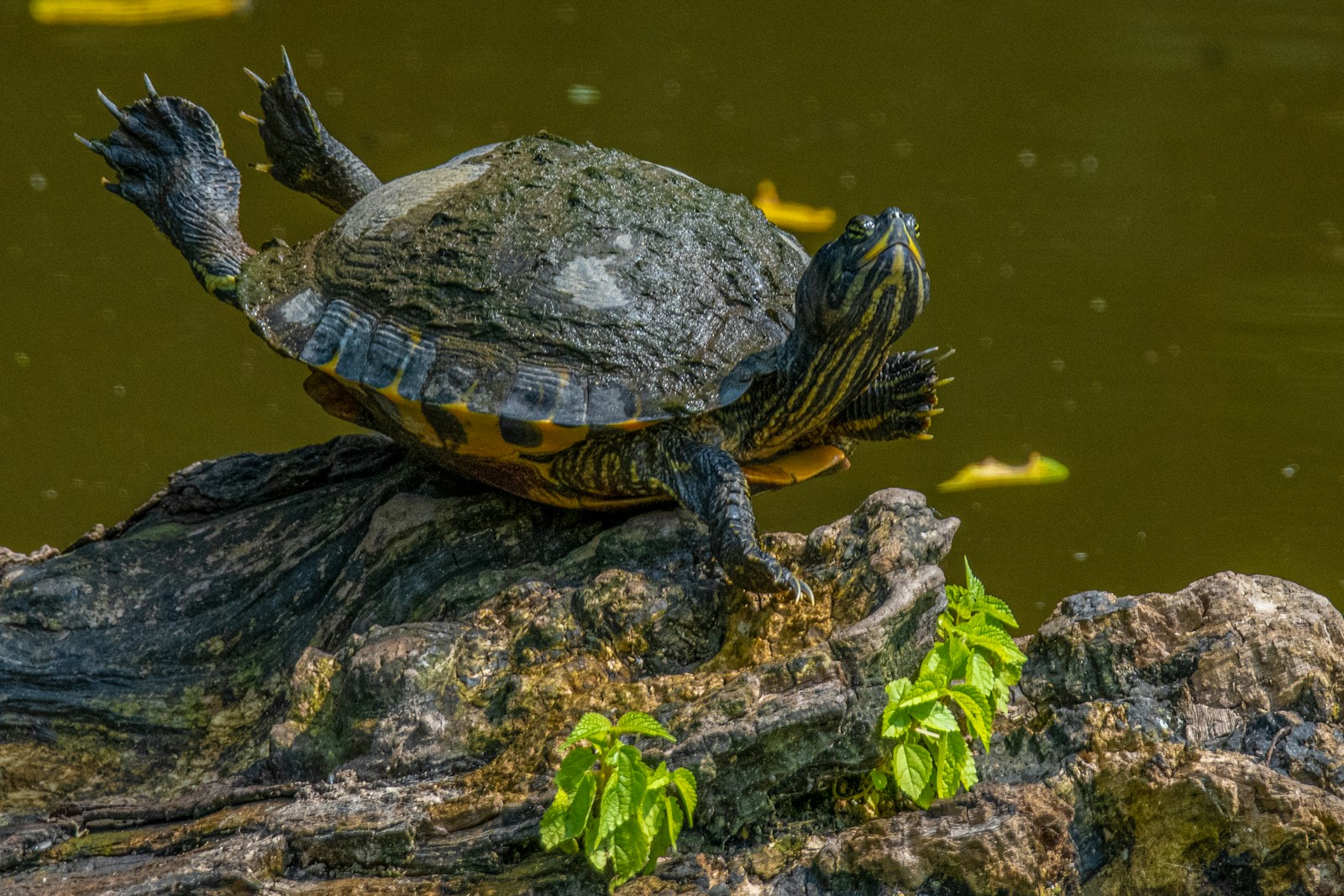
  • When & where: Sandy trails, pine flatwoods, coastal dunes; warm, sunny hours.
  • ID tips: Elephant-like front legs, domed brown shell, moves with a steady, purposeful trundle.
  • Respect & safety: State-protected. Never block, fill, or disturb burrows; give crossing tortoises space and help only by stopping traffic — do not relocate.
Peninsula Cooter

Peninsula Cooter Pseudemys peninsularis

A sun-loving freshwater turtle often stacked on logs like pancakes. Cooters graze aquatic plants and slip into the water at the lightest footstep.
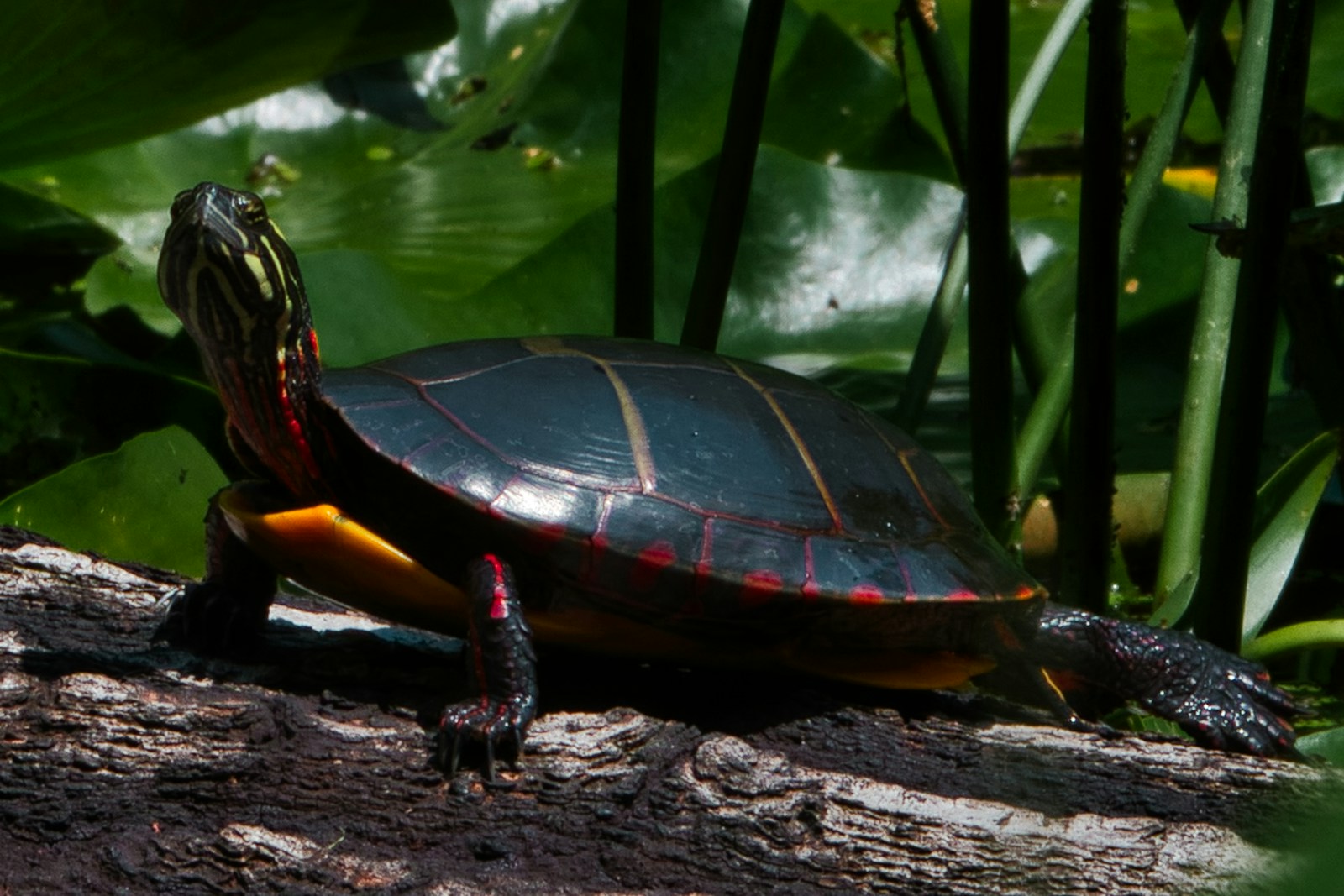
  • When & where: Canals, ponds, slow rivers; midday basking is common.
  • ID tips: Yellow striping on head/neck; smooth, oval shell; long rear claws in males.
  • Respect & safety: Photograph from shore; avoid handling — turtles stress easily and may carry salmonella.
Florida Red-bellied Cooter

Florida Red-bellied Cooter Pseudemys nelsoni

Another basker of canals and marsh edges. Look for the reddish-orange plastron (belly) and bold striping when one pivots off a log.
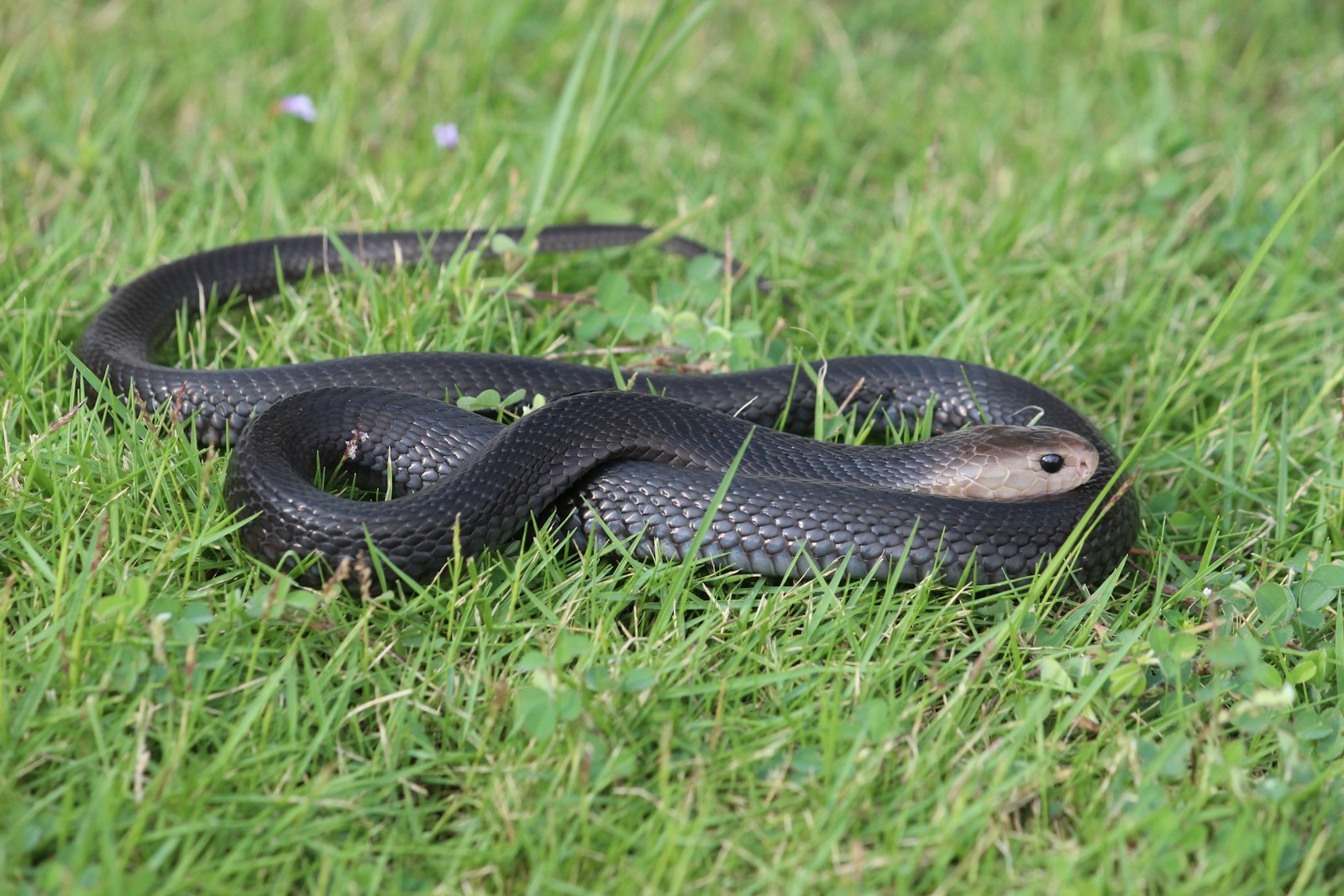
  • When & where: Freshwater with vegetation; warm sunny days.
  • ID tips: Reddish underside; broader head; stripes often thicker than Peninsula Cooter.
  • Respect & safety: Same turtle etiquette — admire, photograph, and let them be.
Southern Black Racer

Southern Black Racer Coluber constrictor priapus

Florida’s most common yard snake: sleek, quick, and all business. Racers patrol edges for lizards, frogs, and insects, then vanish like a shadow through palmettos.
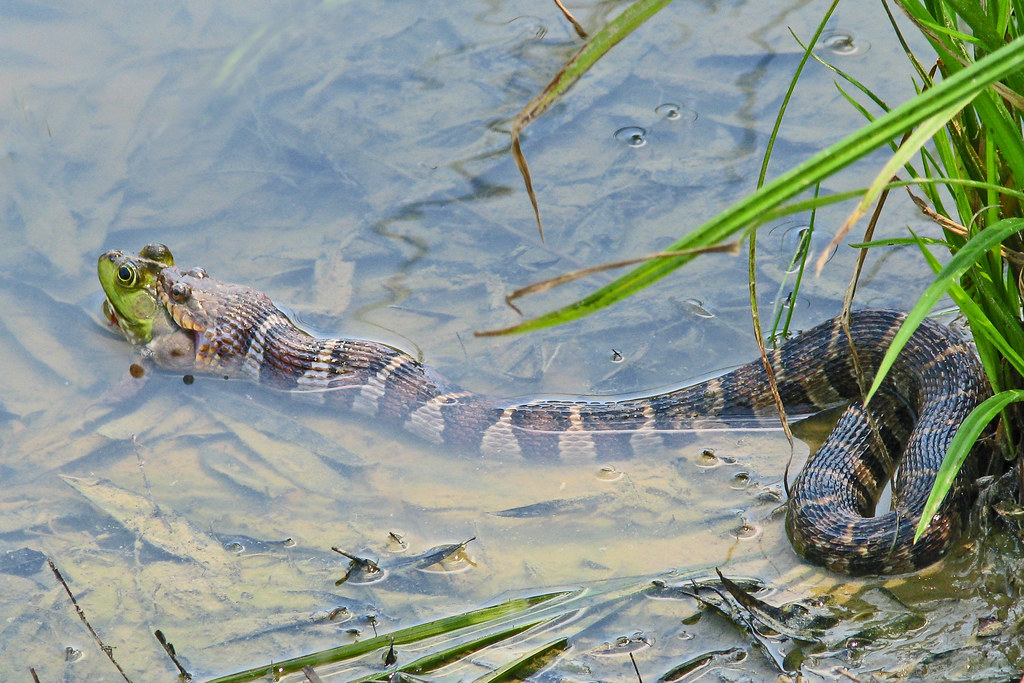
  • When & where: Parks, dunes, mangrove edges, neighborhoods; active in daylight.
  • ID tips: Uniform black body, white chin, big curious eyes; slender and fast.
  • Respect & safety: Non-venomous and beneficial. Give it a lane and it’ll keep your lizard population in check.
Florida Watersnake

Florida Watersnake Nerodia fasciata pictiventris

Often mistaken for a cottonmouth, this non-venomous fish and frog hunter is a regular on retention ponds and marsh edges. When surprised it may flatten its head and musk — a bluff to be respected.
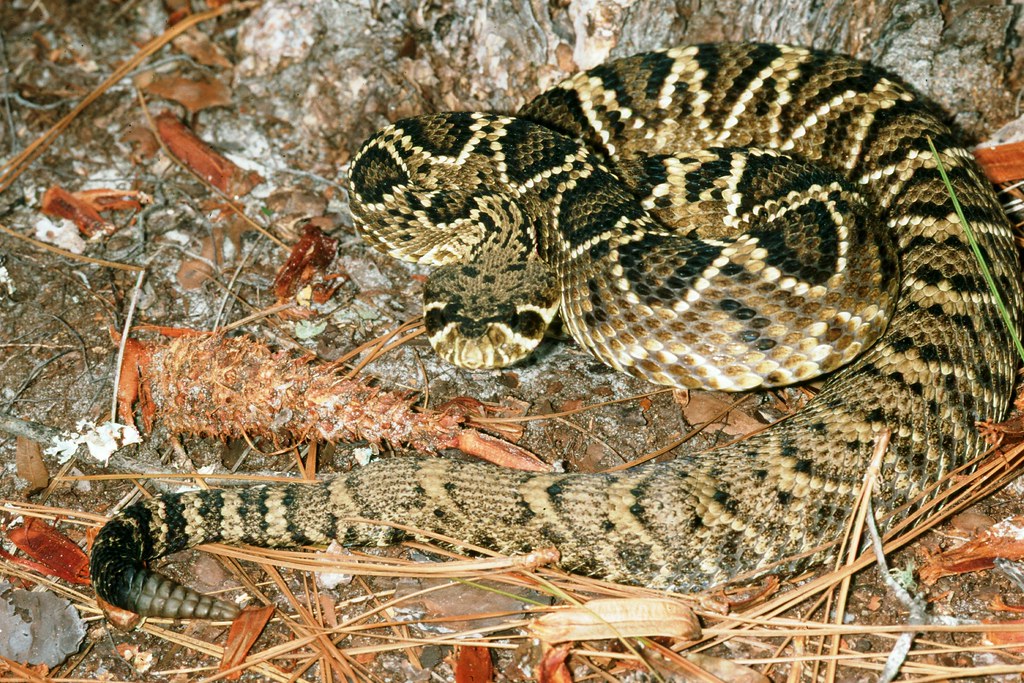
  • When & where: Freshwater shorelines, culverts, lily edges; warm afternoons and evenings.
  • ID tips: Bands or blotches along the body; round pupils; tends to dive for cover rather than hold ground.
  • Respect & safety: Give every snake space. A long lens beats a close step.
Eastern Diamondback Rattlesnake

Eastern Diamondback Rattlesnake Crotalus adamanteus

North America’s heaviest rattlesnake; a symbol of our pine flatwoods and sandy scrubs. Encounters are uncommon, but unforgettable — the buzz is clear communication to back off.
  • When & where: Dry pine woods, dunes, palmetto thickets; warm mornings/evenings.
  • ID tips: Bold dark diamonds outlined in cream; heavy body; broad triangular head and rattle.
  • Respect & safety: Stay on trails, give wide space, and never try to move or pose a venomous snake. They prefer avoidance over conflict.
Florida Cottonmouth

Florida Cottonmouth Agkistrodon conanti

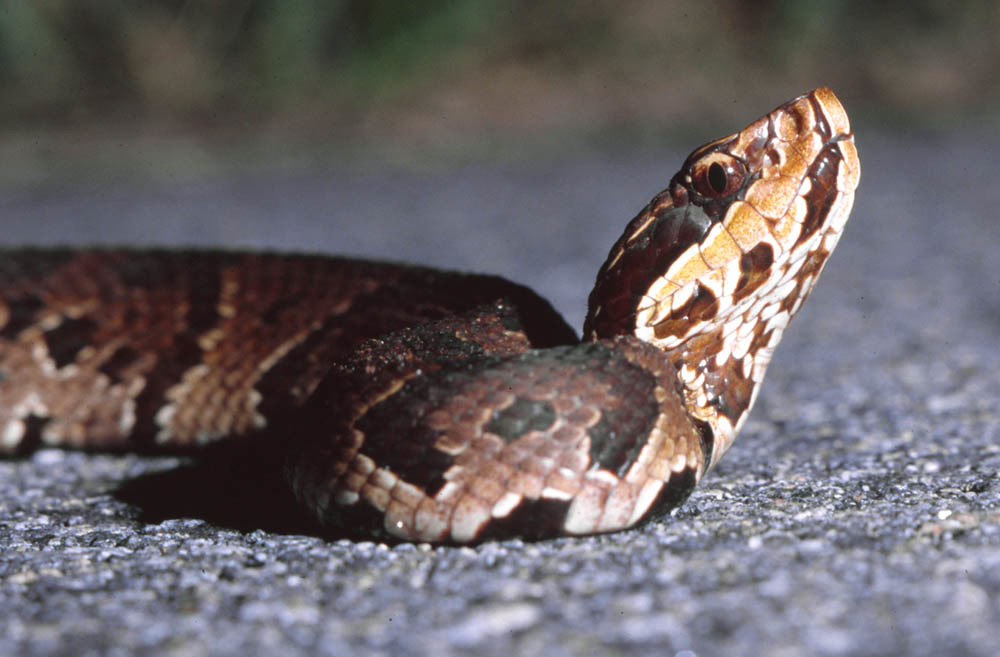
A heavy-bodied, semi-aquatic pit viper most often seen near water. The classic “white mouth” display is a warning; the goal is to end the encounter.
  • When & where: Swamps, ditches, backwater creeks; cloudy days and evenings.
  • ID tips: Blocky head with heat-sensing pits, thick body, facial banding; often holds position rather than fleeing.
  • Respect & safety: Keep generous distance; watch foot placement around logs and shoreline vegetation. Seek medical help immediately in case of any bite.
Green Anole

Green Anole Anolis carolinensis

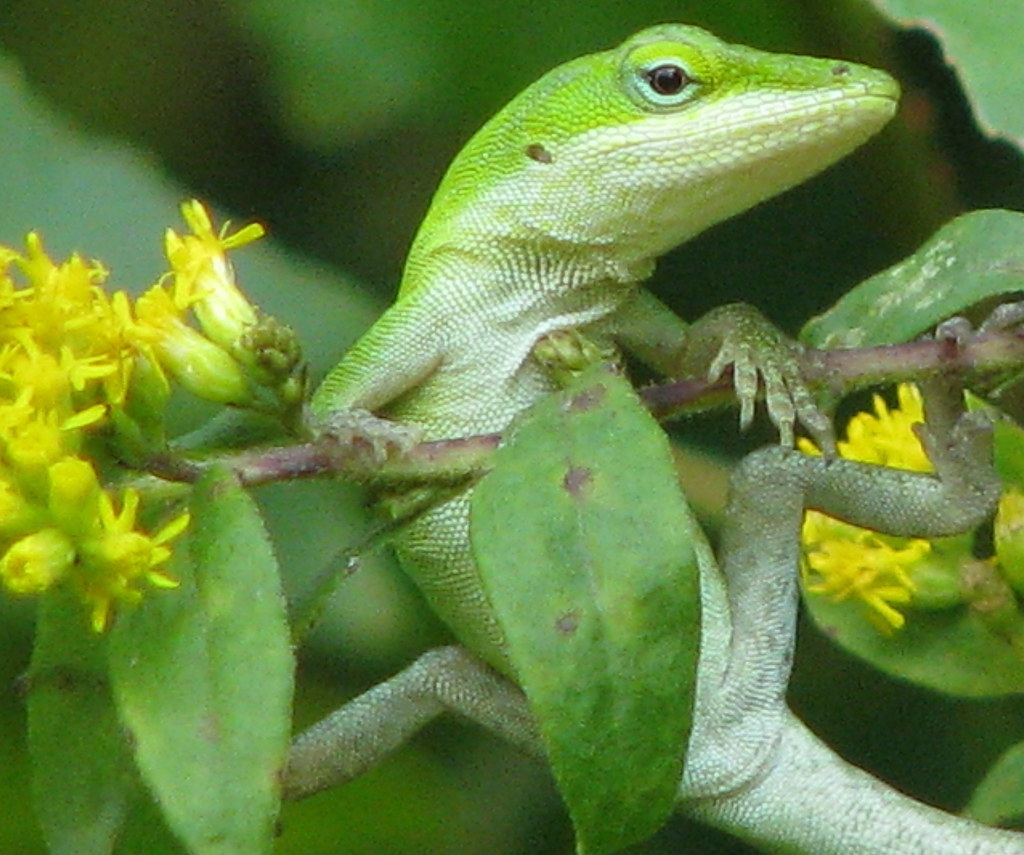
Our native anole — delicate, quick, and able to shift from bright green to brown. Watch males flash pink dewlaps from fence posts and mangrove twigs.
  • When & where: Yards, mangroves, docks; sunny breaks all year.
  • ID tips: Smooth skin, slender head, sticky toe pads; color can change with mood and temperature.
  • Respect & safety: Let them perform; avoid handling. Native anoles compete with invasives — habitat helps them win.
Invasive
Green Iguana

Green Iguana Iguana iguana

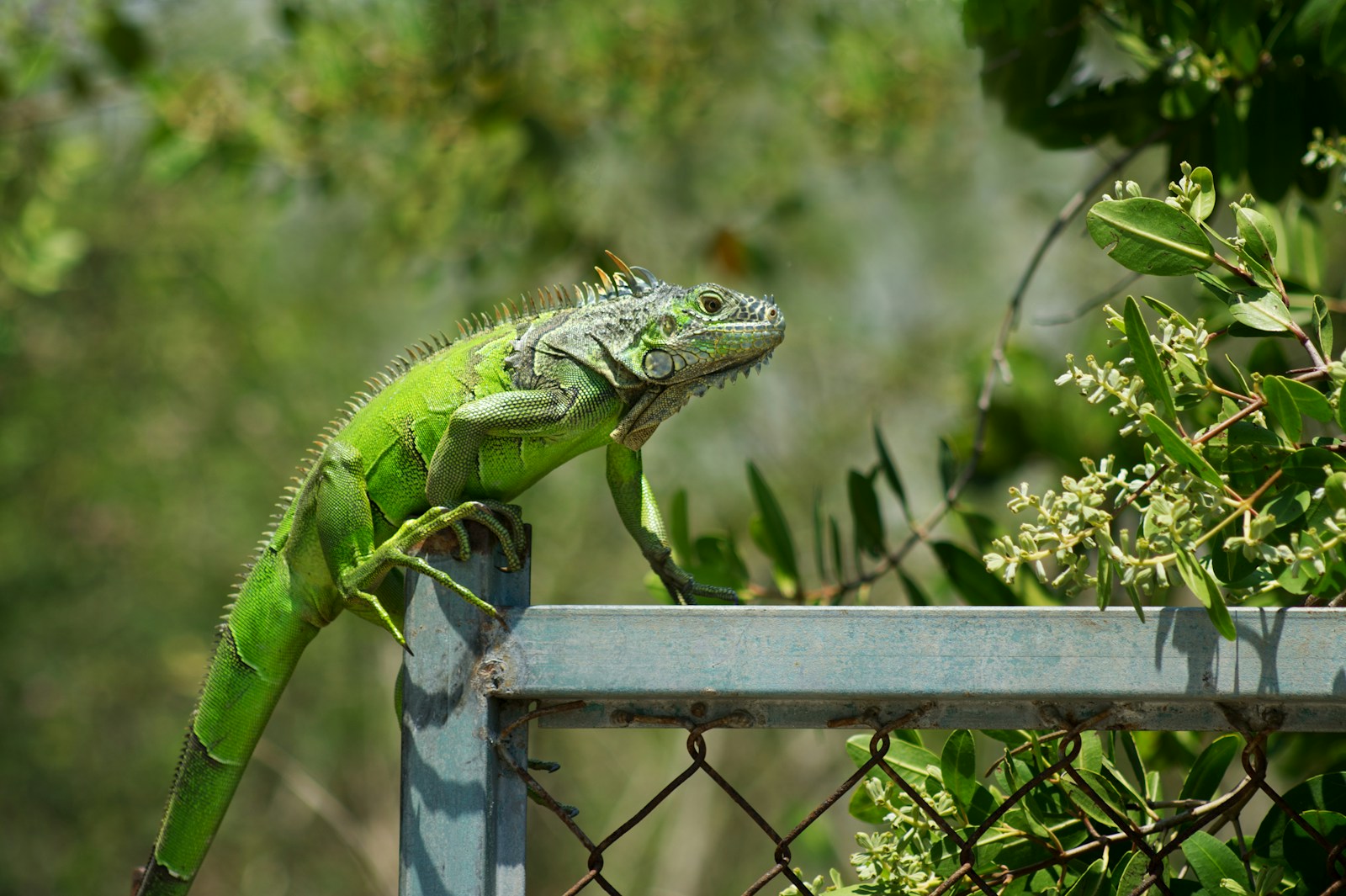
Large, sun-basking lizards introduced via the pet trade. Iguanas thrive along canals and seawalls, eating landscape plants and occasionally undermining banks with burrows.
  • When & where: Warm, open waterfronts, docks, riprap; most visible on bright afternoons.
  • ID tips: Long tail with black bands, spiky crest from neck to tail, big jowls on males, dewlap under the chin.
  • Respect & safety: Do not feed or relocate wildlife. Report heavy activity where they damage seawalls; management is jurisdiction-specific.
Green Treefrog

Green Treefrog Hyla cinerea

A neon note on rainy nights, calling from reeds and porch railings. These insect hunters are common near ponds and mangroves and stick to windows like tiny suction cups.
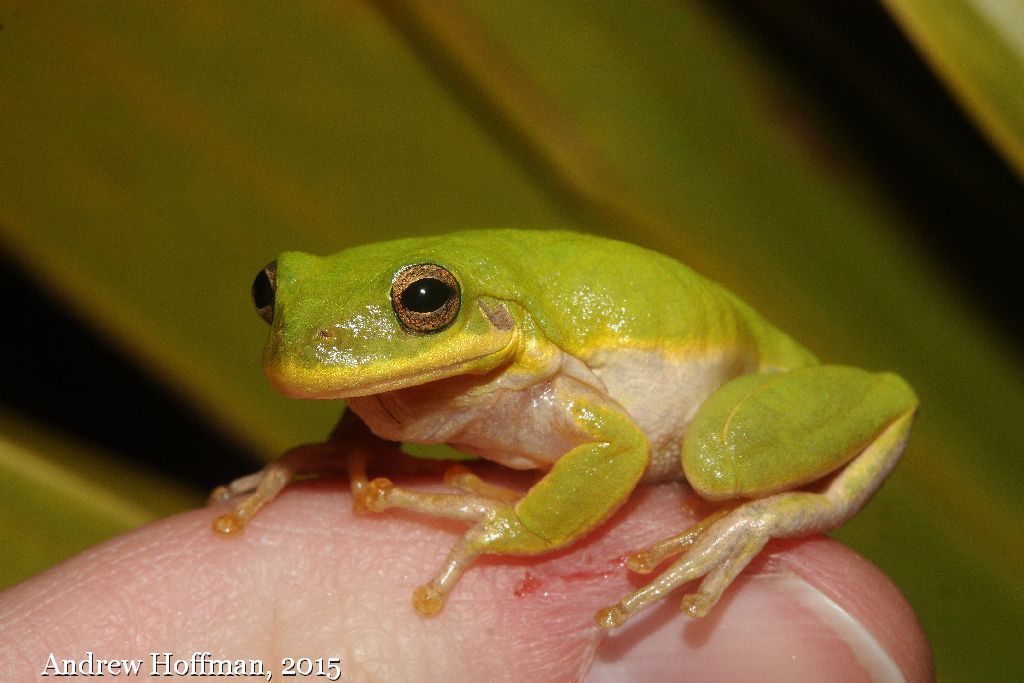
  • When & where: Warm, wet evenings; lights attract insects and frogs alike.
  • ID tips: Bright green body with a pale side stripe, golden eyes, sticky toe pads.
  • Respect & safety: Enjoy the chorus; avoid handling with sunscreened or insect-sprayed hands — amphibian skin is sensitive.
Squirrel Treefrog

Squirrel Treefrog Hyla squirella

Small, variable, and active — the classic “rain frog” of neighborhoods and parks. Colors run from green to brown, sometimes with faint patterns.
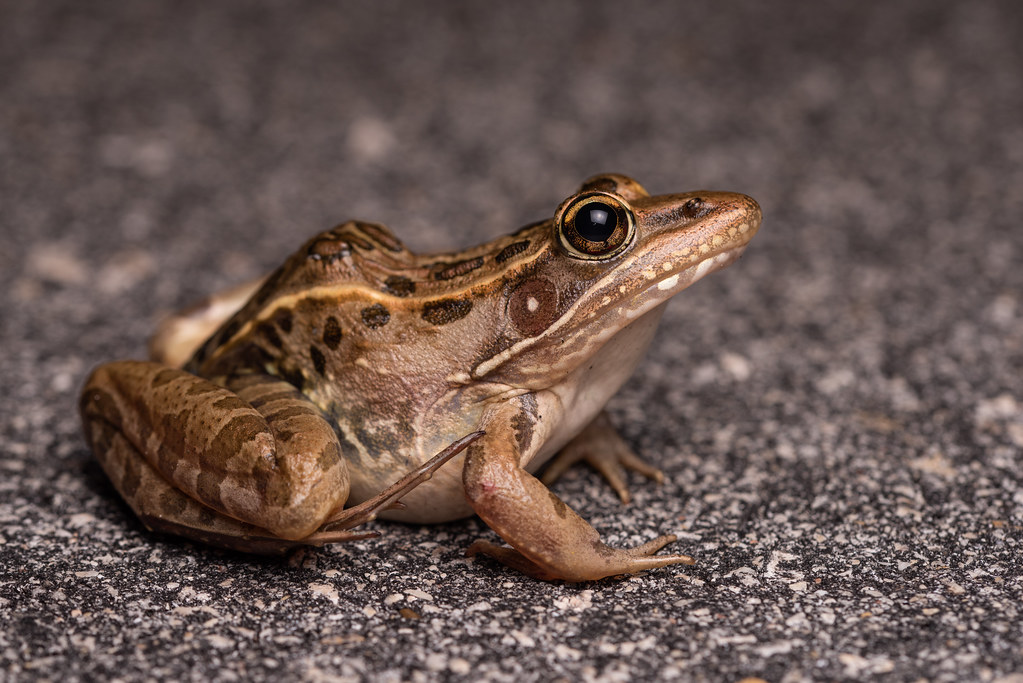
  • When & where: After summer showers around lights, shrubs, and low branches.
  • ID tips: Tiny, smooth-skinned, often without a strong side stripe; more variable than Green Treefrogs.
  • Respect & safety: Listen, look, and leave them to their bug patrols.
Southern Leopard Frog

Southern Leopard Frog Lithobates sphenocephalus

Spot-sprinkled jumpers of marsh edges. Leopard Frogs spring from underfoot and vanish in a single launch, relying on speed more than camouflage.
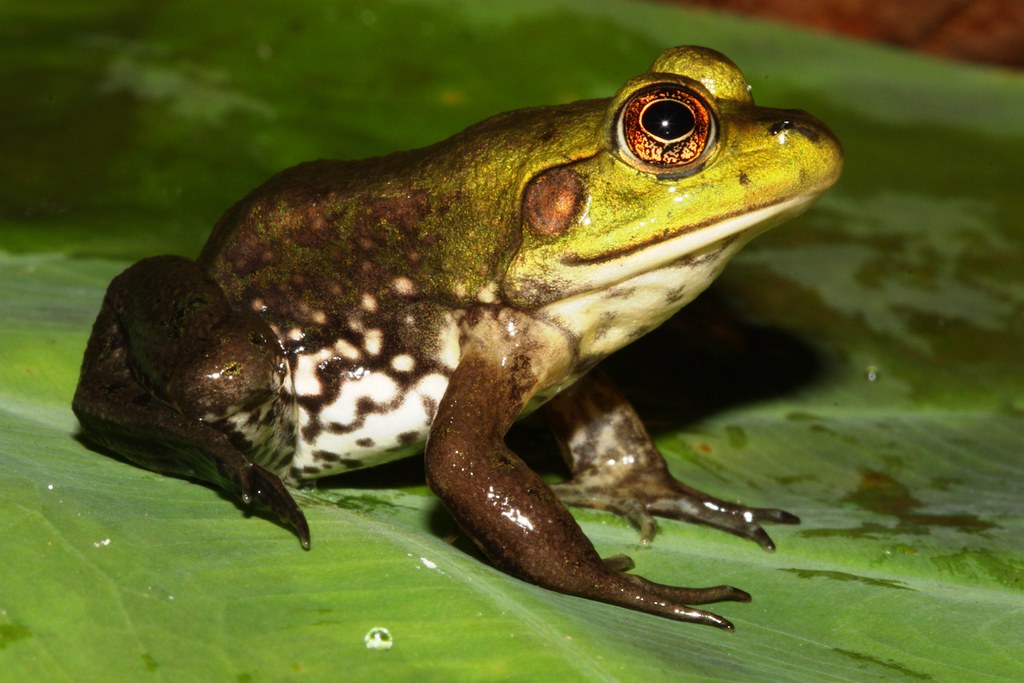
  • When & where: Grassy shorelines, ditches, marshes; crepuscular and nocturnal.
  • ID tips: Bold dark spots, two pale dorsolateral ridges down the back, long legs.
  • Respect & safety: Avoid trampling the waterline during breeding season; watch for egg masses in shallow vegetation.
Pig Frog

Pig Frog Lithobates grylio

Big frog, bigger voice — the deep “oink” carries across marshes at night. Pig Frogs haunt lily fields and canal edges and dive with a splash when spotted.
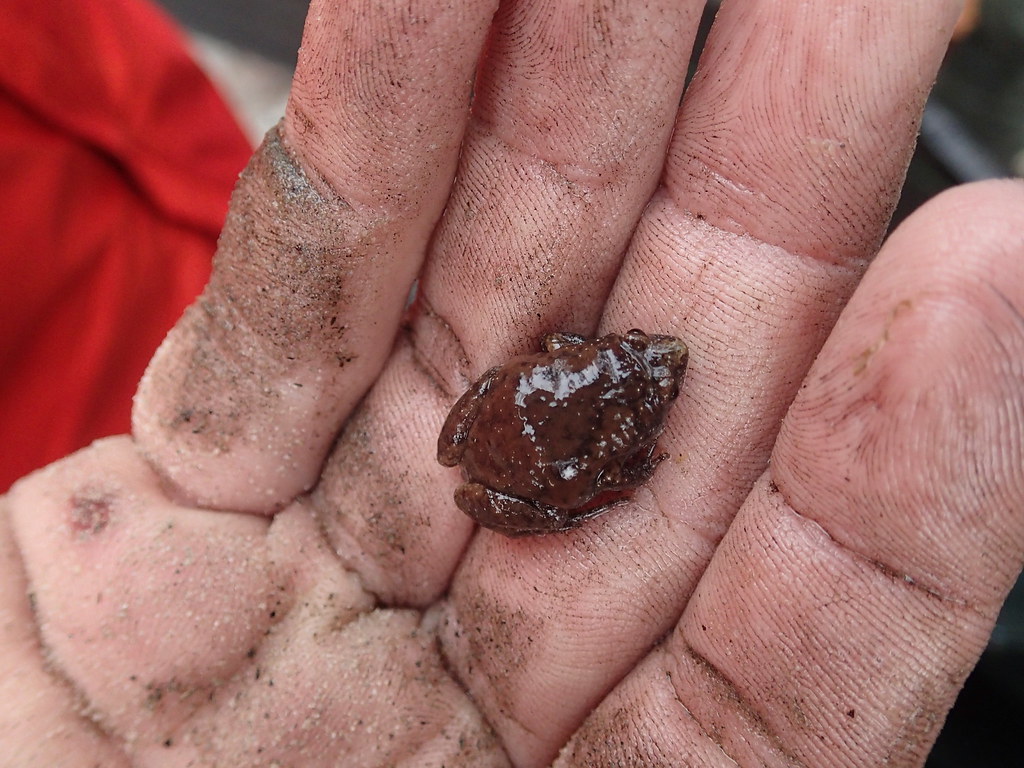
  • When & where: Warm nights near vegetated ponds and canals.
  • ID tips: Large size, long hind toes, mottled olive-brown body; often heard before seen.
  • Respect & safety: Use red light for night listening and tread lightly along soft banks.
Eastern Narrow-mouthed Toad

Eastern Narrow-mouthed Toad Gastrophryne carolinensis

A tiny ant specialist with a pointed face and fold of skin behind the head. Often heard buzzing from leaf litter after rains while staying perfectly hidden.

  • When & where: Post-rain evenings in sandy lots, forests, and yards.
  • ID tips: Small, squat body; tapered snout; smooth gray-brown tones.
  • Respect & safety: Amphibian skin is delicate — enjoy with eyes and ears, not hands.